Category: Equipment

  • Meet Ruby Lou: A New Camper and Our Initial Reactions

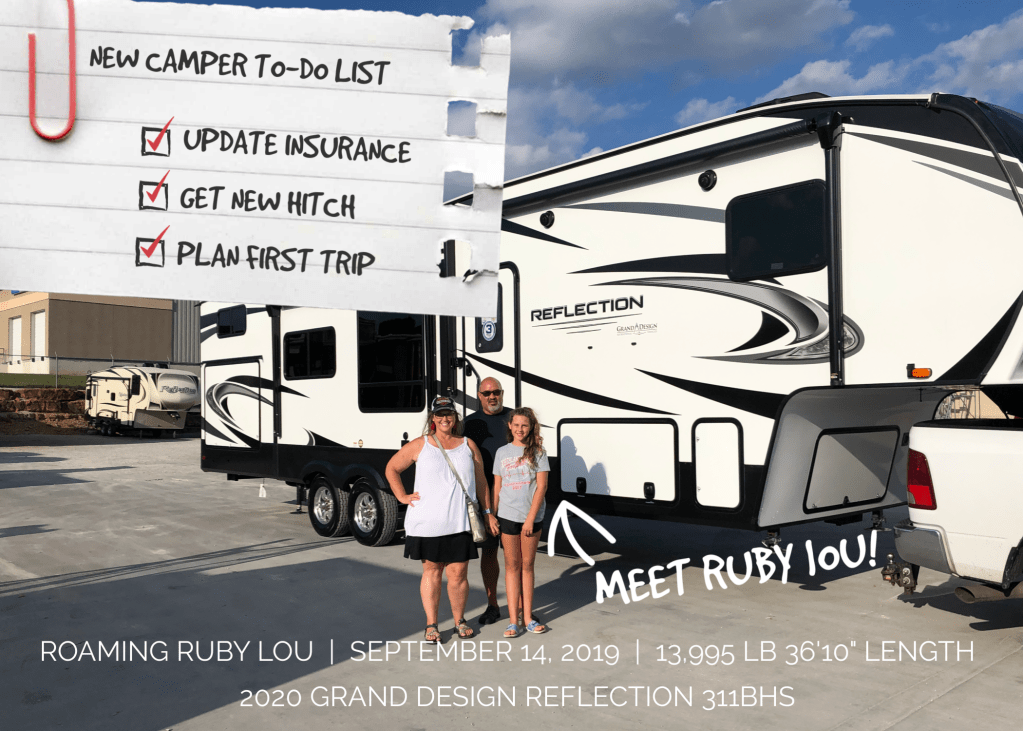
    Meet Ruby Lou: A New Camper and Our Initial Reactions

    We have talked about upgrading our RV for some time. Upgrading conversations usually start when your current RV no longer fits your needs. For us, Betty was still meeting our needs. Well, The Husband no longer liked sleeping in the main bedroom and I always dream of a more comfortable couch. But that was it. And it just did not seem like we had enough of  a list to go and upgrade over.

    Until Labor Day weekend 2019. We were camping at a local KOA and found several dealerships close by. So, we went to peak.

    And we fell in love.

    On September 14, 2019, we traded Betty in and brought home Ruby Lou. Ruby is a 2020 Grand Design Reflection 311BHS.

    We have taken Ruby Lou out once already and we were just amazed at the difference. I even heard The Husband saying to his father, we should have done this long ago.

    So, what do we love initially?

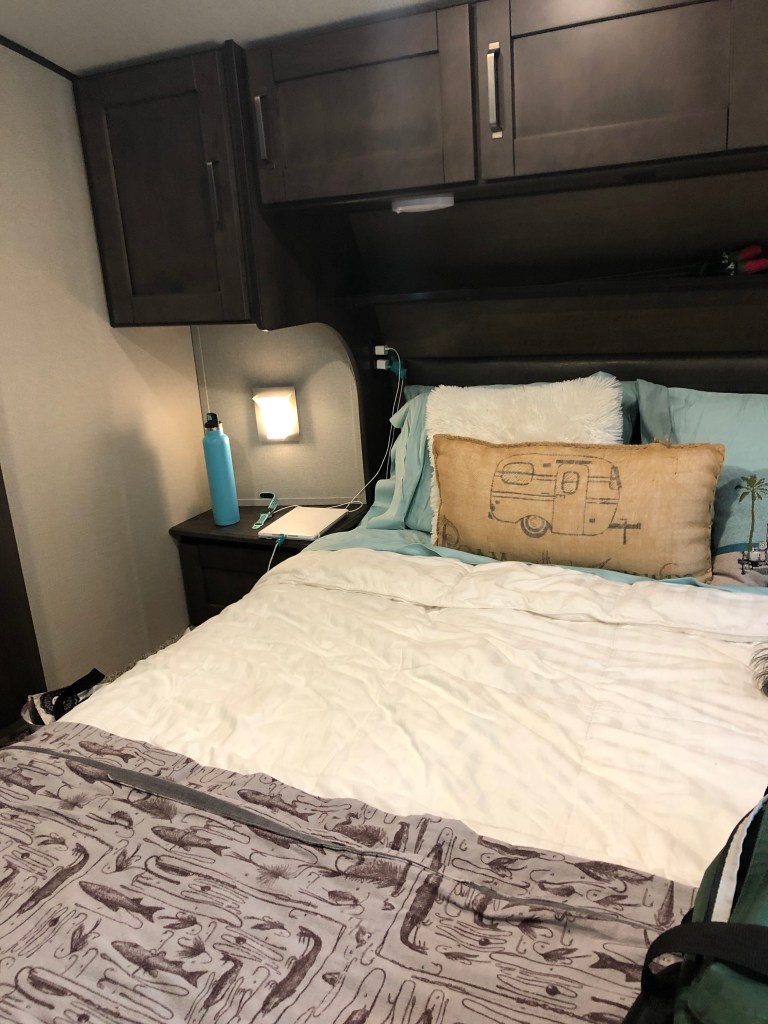
    The master bed. Betty had this curved front with cabinets over the head of the bed. The Husband hated it. He felt like he was in a cave and was always knocking his arms on the cabinets. Ruby Lou’s bed is open. It is also a true Queen so no ones feet hang over the end. We can also walk all the way around the bed.

    The toilet. Betty had the Dometic 300 and Ruby Lou has the Dometic 320. That porcelain bowl makes a huge difference in the overall sturdiness. I am also excited because I don’t have to wonder how I am suppose to be (or not suppose to be) cleaning the toilet.

    Doors. Betty was an ultra-light weight camper. And when we had a half ton truck, that appealed to us greatly. One of the many ways used to cut weight was no doors. Betty had curtains on every door but the bathroom. Ruby Lou has actual doors at every door. And other quality construction; like real wood drawers and cabinets. Our Short Chic appreciates the fact that she can go to her bedroom and shut her door and have some real privacy. A curtain just did not do that for her.

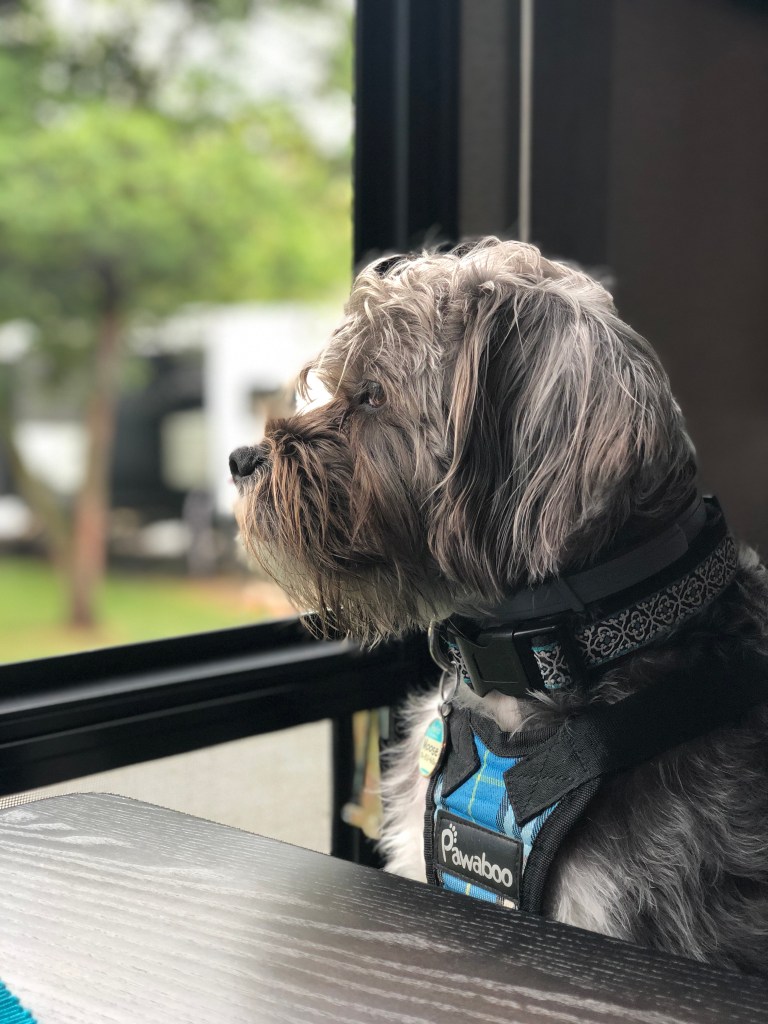
    The Windows: Betty had maybe 7 total windows and most of those were small. Ruby Lou has so many windows and they are HUGE. The amount of natural light we have access to is unbelievable. On the flip side, Ruby Lou has black out shades that filter out the light when we need the light filtered. So, we find ourselves sleeping better (comfy, roomy bed plus light filtering shades) when we need sleep and we find ourselves sunny and bright when we want it. I think Moose The Camping Dog loves all the windows and he loves looking out at all the campground activity.

    The Size: Betty was 35 feet long. Ruby Lou is 36 feet 10 inches long. Betty had 2 slides and Ruby Lou has 4 slides. Yes, we doubled our weight but we barely increased our length. Ruby Lou feels huge to us but also feels completely manageable driving down the road and backing her into a space.

    I am sure as time rolls on and we add more nights camping in Ruby Lou our love list will grow. I am so looking forward to a long vacation in her next summer!

    Thank you for checking out Ruby Lou!

  • RV Essentials for the New RV Owner

    RV Essentials for the New RV Owner

    RV Essentials

    In August 2017 we watched Houston Texas flood. Two dear friends of ours found themselves right in the middle of the flooding. Both of them lost their homes. Both are living out of RV’s while they rebuild their lives. One of our friends already had an RV but our friends and former neighbors, Amanda and Jacob, did not own an RV. They started the difficult task of finding an RV that would meet their immediate need, a place to sleep, eat, and live for the next several months that could also transition to meet their recreational needs later. They ended up buying their first travel trailer.

    As if purchasing a camper was not overwhelming, Amanda reached out after they got it home. She was finding the next step, outfitting the camper, to be just as overwhelming. She suggested we develop a list of what we would recommend a newbie needed in order to get started.

    So, I set about asking that question to my friends. Here is what we came up with.

    OUTSIDE OF THE CAMPER: 

    Water Hoses: We find it is best to have 2 sets of good water hoses that are at least 25 feet long. If you are really safe you will have one for potable water and one that you use to clean the black tank.

    Side note: when we are camping at locations that do not have water, we will connect all of our water hoses together and fill up mid camping trip. When selecting our sites being close to water is important to us.

    Sewer Hose: Typically one will come with your camper but we found it is short and flimsy and you will want a longer one. We use and like the Camco RhinoFLEX. Ours is only 10-15 feet but they come longer. Depending on where your tanks are you may want to have a longer one. Make sure whatever sewer system you purchase has threading on it so that you can screw the fitting into the sewer. We have been to two different campgrounds that required this.
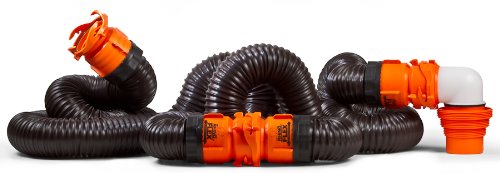
    In addition to the Camco RhinoFLEX hose, we recommend ordering the RhinoFLEX Clear 45 degree RV Sewer Hose Swivel Fitting. It may not be a necessity but being able to see when the water runs clear is helpful. The clear plastic portion of this fitting helps with that.

    Latex Gloves. To glove or not to glove is a question of personal preference. We are glove people. No one wants to touch/handle sewer equipment without it.

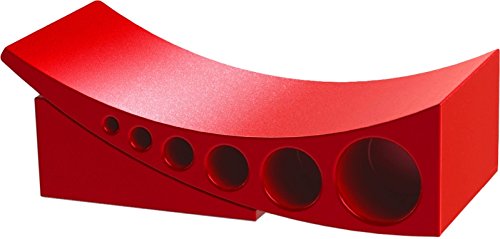
    Levelers. Once you get that new camper to the campground you are gonna need to level it. We love Anderson Leveling System because they are so easy to use. They look like a giant curved ramp that you just place under the tires and back onto them.
    General Tool Box:  Everyone needs tools and campers are no exception. Screwdrivers, Wrench Sets, zip ties, a level, and even an impact driver can help you put those stabilizer jacks down quickly.

    Weight Distribution Hitch: A weight distribution hitch will help distribute the weight from the ball hitch back toward the axles of the tow vehicle and the trailer. Allen highly recommends the Anderson No Sway or the Blue Ox. We have an Equalizer and it works just fine but it just does make a lot of noise. Side note: that is how you know it is working. We just affectionately call ours the Squeekalizer. We actually purchased ours from the dealer when we bought our camper. Allen has purchased his as an after market purchase.

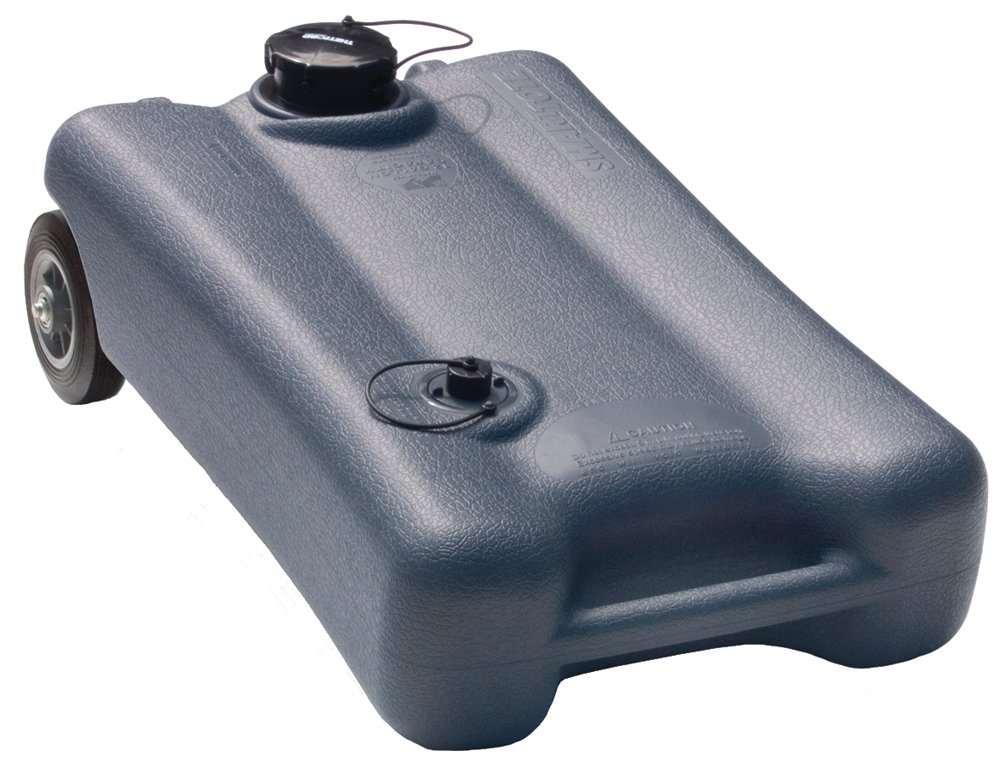
    Tote for Black and Grey Water: Depending on how you camp you may find yourself needing to empty the black and grey tanks before the end of the camping trip. A portable tote has wheels so you can haul the black or grey water to the dumping station without moving your camper.  Barker, Thetford, or Tote and Store are all good brands.
     

    Holding Tank Enzymes: There are several products on the market to help you care for your black tank. There are pods you can put down the black tank or enzymes that help eat the bacteria. Besides keeping the smell down you want to keep build up off the sensors. If the sensors get dirty they will tell you the tank is full before it actually is. We also recommend any 1 ply toilet paper. You do not need specific RV toilet paper.

    UPDATE: I wanted to mention that we use a concoction of water softener, laundry soap and water to help keep our black tank clean. We put one cap of each down the black tank with a gallon of water and we leave it as we drive around. The sloshing around helps clean our black tank. We do find that the cleaner the black tank is, the less the smell coming from it.

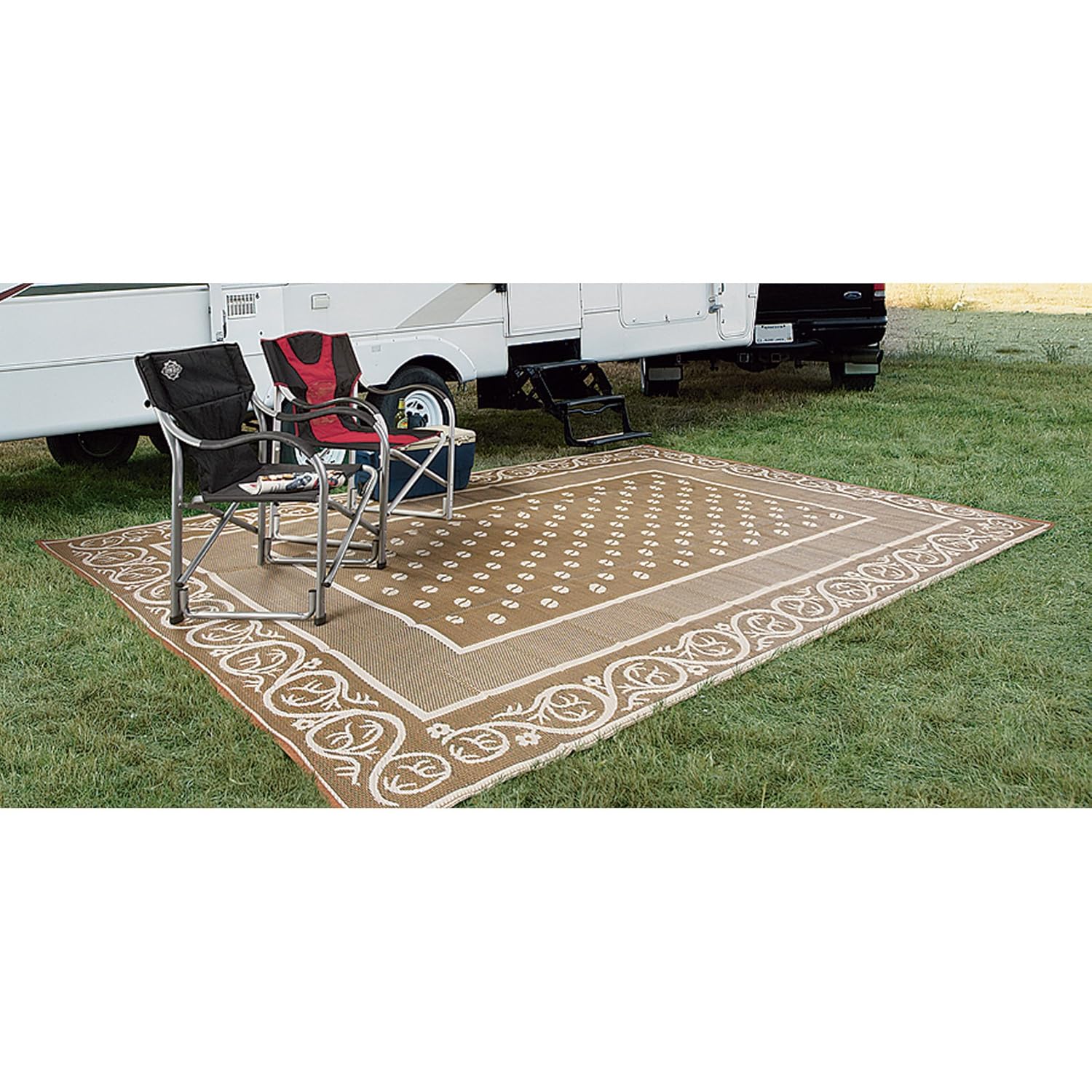
    Ground Mats. You can find these at a local Wal Mart store. They are large woven polyproplyne material that stand up well to rain, sun, and even lots of little feet. The first weekend I got my mat, it rained a storm and it was solid mud by the end of the weekend. We drug it over to the water facet and rinsed all that mud away. It looked brand new once again. You absolutely may be able to start camping without a ground mat but soon you will add it to your wish list.
    INSIDE THE CAMPER:

    Suggestions for the inside of the camper get difficult. It is such a personal preference. Do you use paper plates or do you eat off dishes. Do you put sleeping bags on the beds or do you outfit with sheets and comforter. I can only offer ideas on needs. How you meet those needs is really up to you.

    Bedding: I personally have made my camper beds as comfortable as I can. We have upgraded mattresses. I have found high thread count sheets. I want my “vacation” bed to be as comfy as my home bed. Others may relegate old bedding to the camper. Others may throw the sleeping bags on the beds and call it good. What I can tell ya is you need bedding. I will say this, if I had unlimited funds I would be purchasing Beddy’s for my bedding. I would really do it for those pesky bunk beds that are so difficult to make.

    Eating/Cooking/Serving: How you camp will help you determine what you need. Paper plates, plastic forks, melamine dishes, plastic glasses, faux Yeti’s (or even Yeti’s), flatware, pitchers, ect. The list of things you could use is unlimited. So take a moment before you buy to examine the type of camper you are. Then make your selections. General advice I have here; IKEA is a great place to outfit your camper (assuming you have one close to you). They have folding pans. Small utensils. Look for nesting bowls, collapsible bowls, strainers, even measuring cups.

    Towels: Bathing, swimming, kitchen hand towels are all necessities. You may chose to use older towels from home or you may choose to have designated camper towels. We love IKEA bath towels for the camper because the come with a built in loop for putting them on a hook. Don’t have hooks in your bathroom, then I would say you need to get some 3M hooks.

    ÅFJÄRDEN Bath towel IKEA The long, fine fibers of combed cotton create a soft and durable towel.

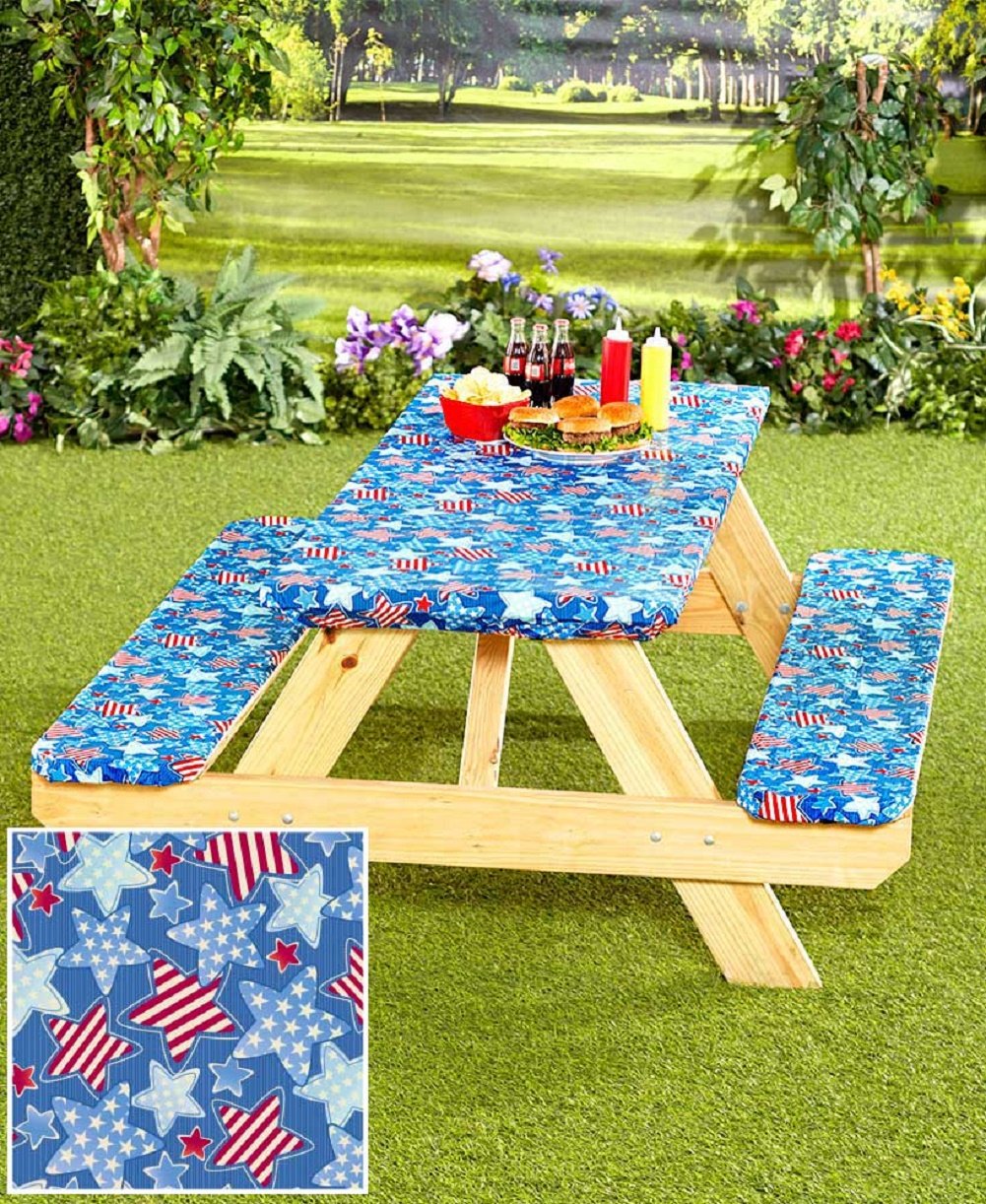
    Picnic Tablecloth: Picnic Tables at campgrounds kinda gross me out. Animals get on them. People sit on them. You just never know, so I combat that with a solid tablecloth. Besides a pretty tablecloth on a picnic table in the outdoors just sends a message that you are there and you are getting comfortable. It makes me smile. And it puts a layer between me and whatever has been on that table before me.

    If you are really interested you can find three piece picnic table covering.  These provide a tablecloth with elastic to hold it down and they also come with bench overs.
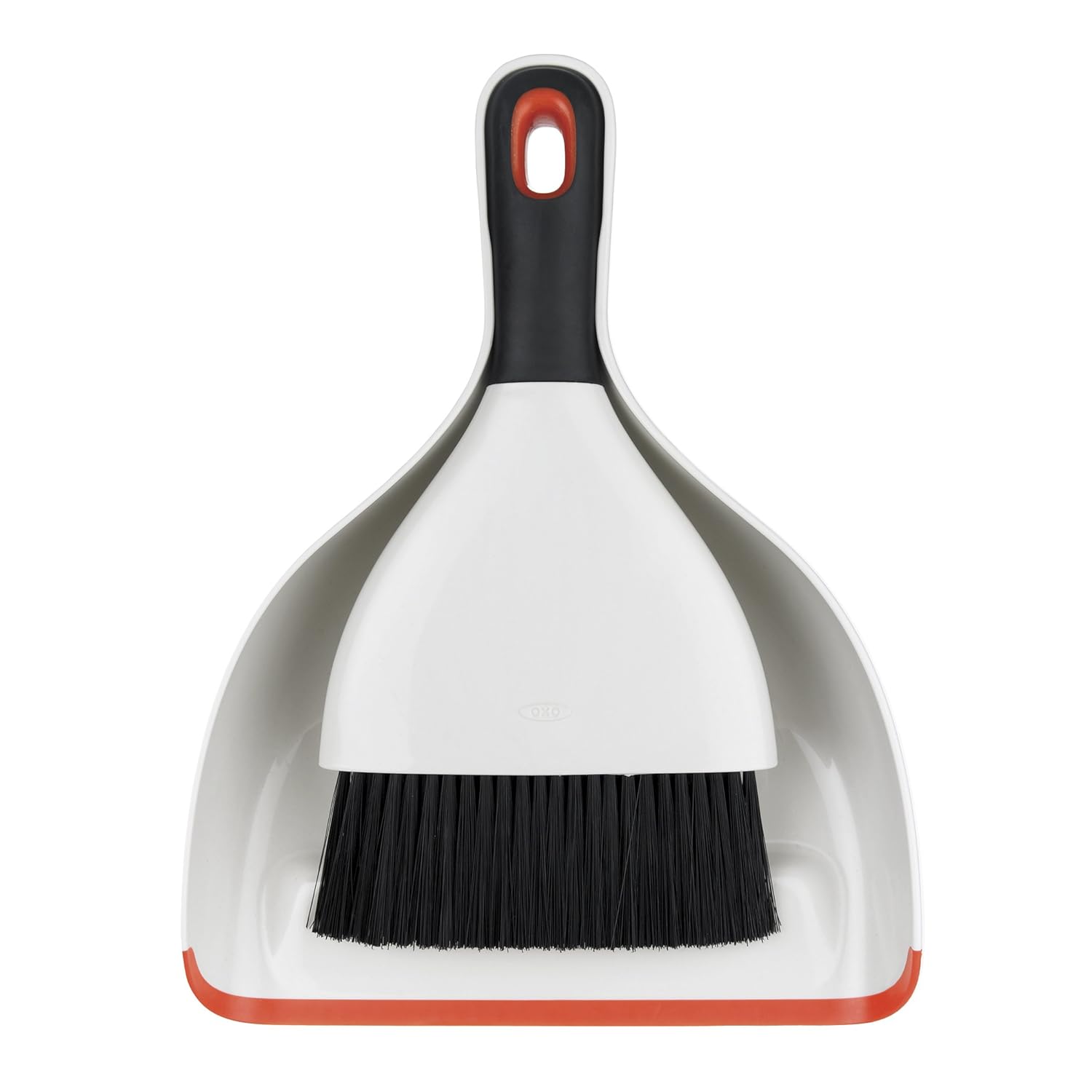
    Dustpan and Brush: With all the ins and outs going on, it is a given that your camper will track in dirt. I use a small brush and dustpan all the time to battle the dirt. A hand held vacuum might also be a good idea. I know every year when we go on our extended vacation, I put the Dyson in the camper.
    Nightlights: If you camp with small children or you yourself get up in the middle of the night, it maybe important for you to have a nightlight. I use a battery operated candle. It provides just the right amount of light.

    Shower Caddy: This is another personal preference. Will you be showering at the campground showers or only in your camper? If you think you will be using the campground showers, a caddy will be a must to carry your things to and from. I recommend something you can get wet that drains easily.

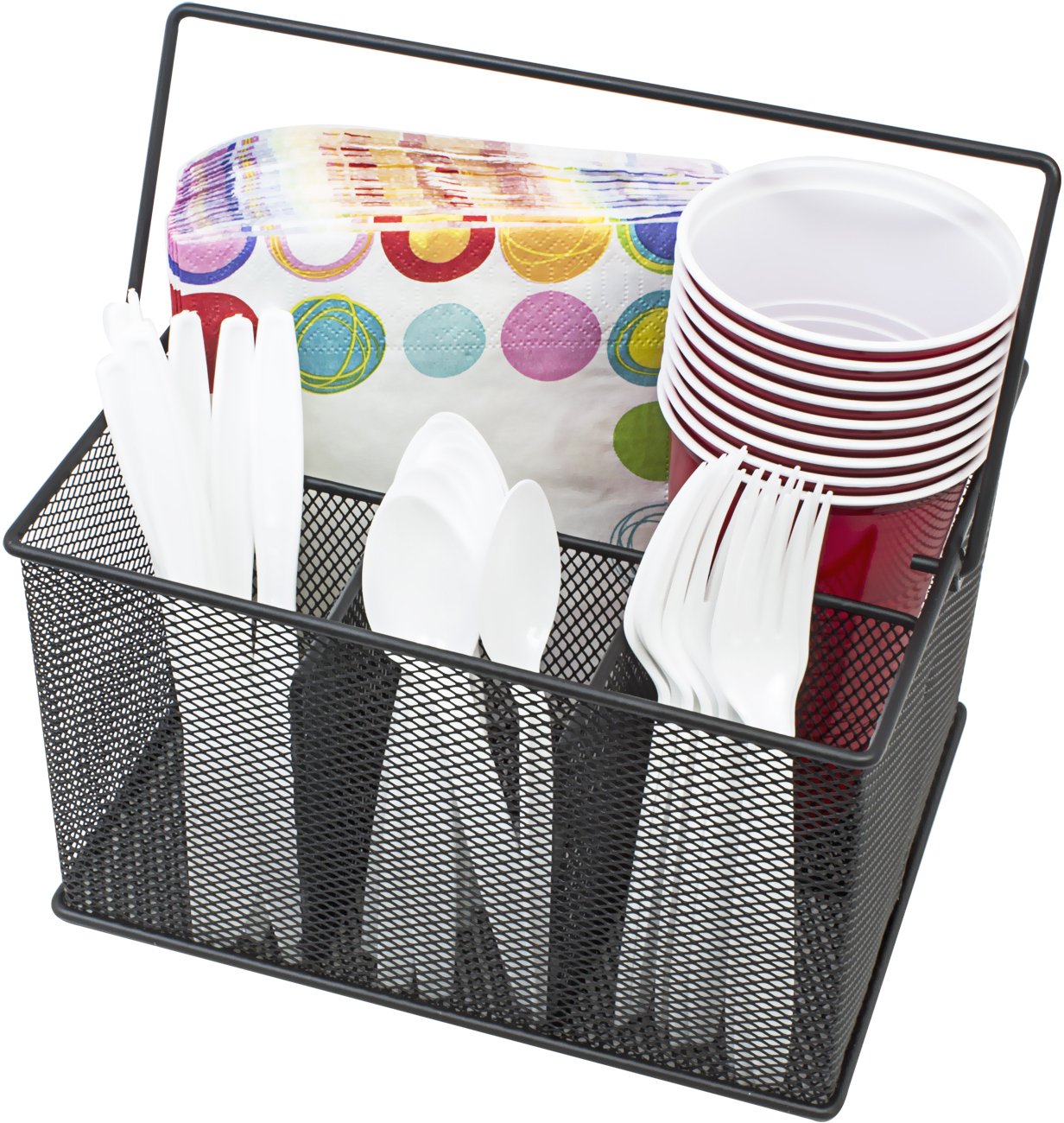
    Silverware Caddy: Again, do you plan to eat out at the picnic table frequently? Having a caddy outside to keep plastic wear in is handy. You can also put napkins or salt and pepper shakers to keep the wind from blowing them around.
    I created a wish list for RV Essentials on Amazon so you could see photos of the things I am describing here. Take a look.

    I am sure there are so many other things you will add to your wish list for the camper (flashlights, x-chock wheel stabilizers, decorative pillows, ect). As far as this list goes, I am sure there are things I have forgotten. That is another benefit to group camping, someone will remind me!

    What item do you think you can’t live without that you would recommend to a newbie?
     

  • Why You Should Have An Electronic Management System For Your RV

    Why You Should Have An Electronic Management System For Your RV

    Today’s RV’s come with a multitude of extras that often have electronic processors: Flat screen TV’s, DVD players, refrigerators, microwave ovens, or air conditioners to name a few. Taking care of your camper is more than just taking care of the body, with these extra gadgets you have to take care of them too.

    When we upgraded to a travel trailer in May 2015, I started doing research on protecting those extra’s in our camper. I learned that the campgrounds we were anxiously wanting to visit could be the source of so many potential problems. The power supply in the campground can either spike sending too much voltage causing a surge or it can become taxed and dip with too little voltage, often called a “brownout.” Both brownouts and power surges can cause damage to the essential electronics in your camper. And here is the really bad news: often the warranties do not cover electronic processors damaged by surges or brownouts.

    Wanting more than just a surge protector, I started researching ways to protect against both surges and brownouts. My research lead me to Progressive Industries Electronic Management Systems (EMS). The consumer product reviews for this company are outstanding and that appeals to me. I appreciate companies that stand by their product and fix any problems that do come up quickly and to the customers satisfaction. I also liked that this company offers a lifetime warranty on their products and they are made in the USA.

    IMG_6348

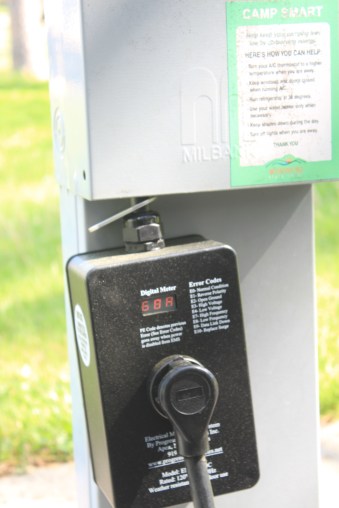
    I liked the product enough to buy a system for our camper and then recommended it to the Taylor’s when they purchased their new camper. We each purchased an Electrical Management System from Progressive Industries for our campers. However, I purchased the hardwired system and Wayne purchased the portable system. Both systems continuously scan and provide protection for:

    • High/Low Voltage Protection ( Low <104, High 132>)
    • Lost/Open Neutral Protection
    • Frequency Protection (Low <51Hz, High 69Hz>)
    • Open Ground Protection
    • Polarity Protection
    • Previous Error Indicator
    • Surge Fault Indicator and Amperage Meter
    • Thermally Protected

    The Hardwired System (The Todd’s)

    I purchased the EMS-HW50C. The upfront cost is a little high (between $300-$500 unless you can find it on sale) but I can tell you this system has already saved me once. Angie and I took a couples trip to Branson,  Missouri in the heat of the summer. In the campground, with so many units running air conditioners, the power dipped and my EMS shut down all power to the camper until the power was at a level sufficient to safely power the camper.

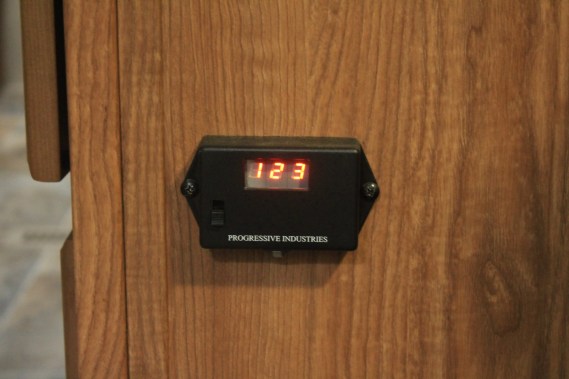
    I installed this model in my camper in a power access panel. It did require some splicing of wires to get it properly installed. The EMS-HW50C also came with a digital display that I installed on the inside of my camper that continuously scrolls through the power source information. If the EMS detects any problems (high or low) it shuts down the entire system. As soon as it detects the right levels, it allows the power back to the camper.  I like the fact that if something is wrong, I can check the display and see exactly what is wrong all from the inside of my camper. Besides the convenience of reading the display from inside the camper, I also liked the added protection against theft by having the EMS become a part of the campers electrical wiring system.

    IMG_6439

    Everyone who owns a camper would probably agree with us that setting up can be a hectic time. We all have mental checklist but occasionally we forget a step. I know before hooking my camper up to the campground electricity I should make sure that the power is off. My EMS provides some peace of mind that if I should forget and skip this step, I am still protected. The EMS delays power to the camper until it has done an initial check for power source and determines it is safe to proceed.

    The Portable System (The Taylor’s)

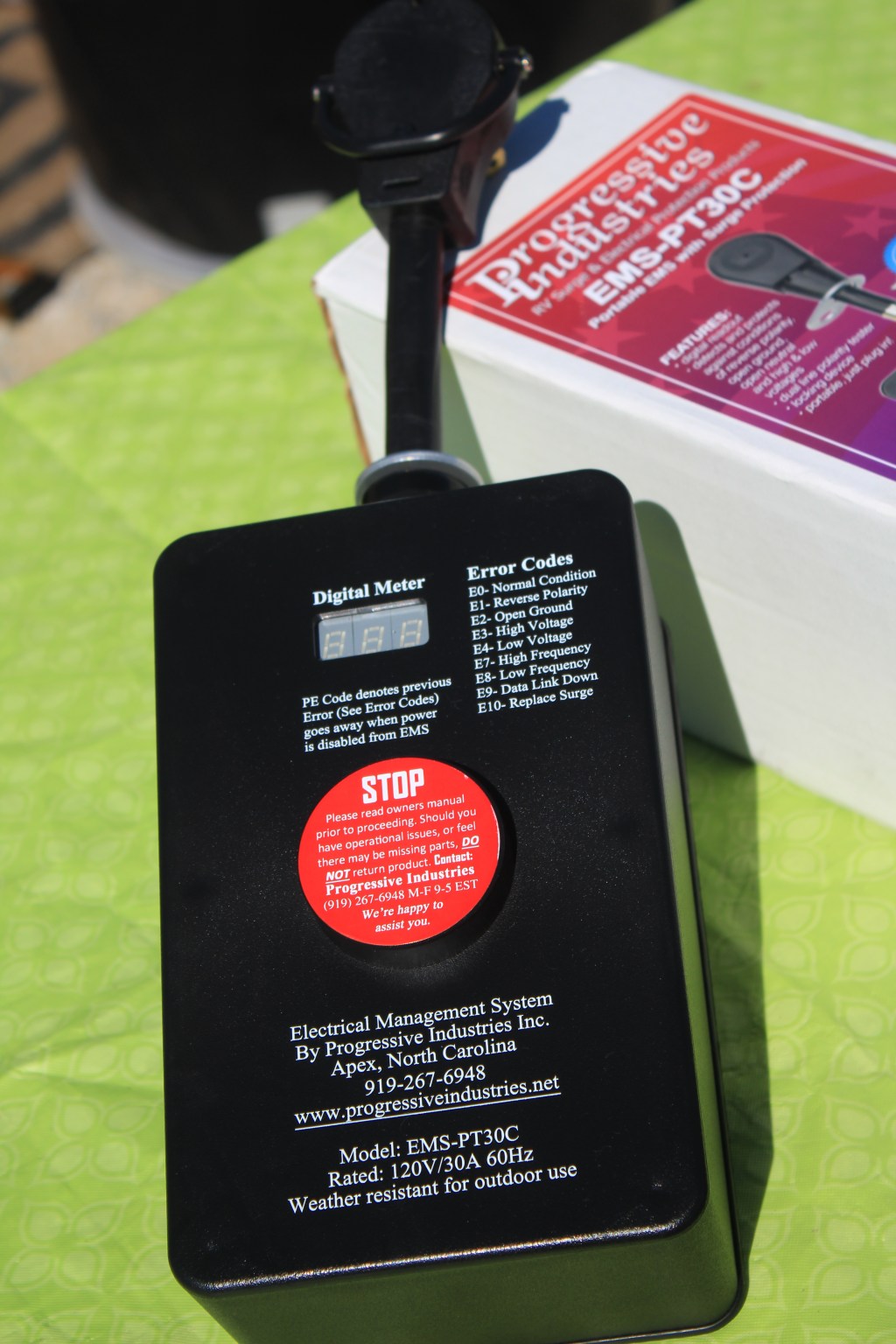
    We purchased Model EMS-PT30C. The major difference between my system and Allen’s is how it is installed. Allen has already described that his is hardwired on the inside of his camper, mine is a portable system that plugs into the campground power supply first and then the camper plugs into it. The continuous scrolling display is done at the power site and not inside my camper.  The upfront cost is slightly less (between $200-$400 depending on sales you might find). The portable system does all the same things as the hardwired system except it has a locking devise and is weather resistant as it is outside.

    IMG_6442

    In our perfect world, Electronic Management Systems would come standard on all trailers but until that happens we do highly recommend adding one to your camper aftermarket. We have both been pleased with Progressive Industries Electronic Management Systems, and think either system, the hardwired or the portable, will provide power protection for all of your electronic gadgets.

    allentodd wayne


  • “Pretty Dishes” or Convenience: Stocking The Camper

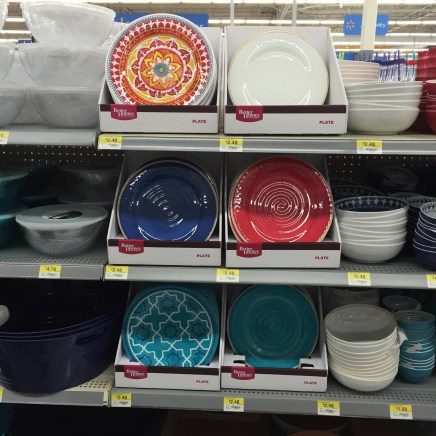
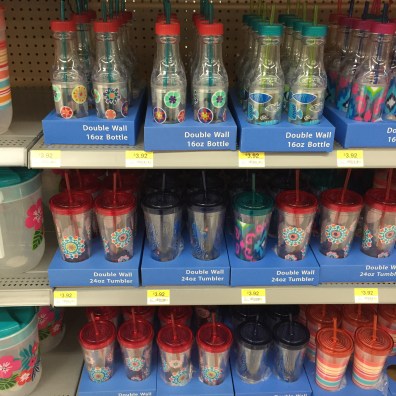
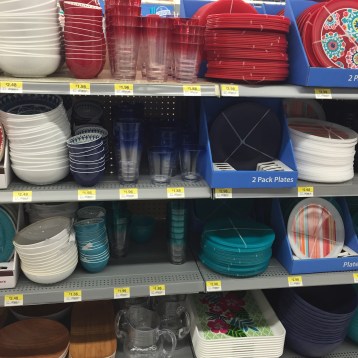
    Recently I was out of town on a business trip and found myself needing to stretch my legs. I chose a local box store to roam around in and found a display of summer tableware.  I love the patterns, the bold colors, and the fact that they are all plastic. Which makes them perfect for the camper.

    IMG_7504Stocking the inside of your camper is a necessity. How you approach this task is personal preference. I feel as if I have been on a developmental process for the past six years trying to figure out the best way to stock our camper.
    For our first two campers I found myself raiding my home for items to reallocate to our camper. Bath towels with holes in them no longer acceptable for inside the house, went to the camper. Unsightly pots and pans I had wanted to replace forever went to the camper. No need for sheets or blankets, we had sleeping bags. I raided relative’s homes or scoured garage sales for things I did not have but needed.  My philosophy was we were camping and there was no need for anything nice. Camping was about roughing it, right?

    Over the years our campers have changed as well as my philosophy on stocking the inside of the camper. While we upgraded from sleeping bags to old bedding, it was still old bedding. We still used old pots and pans but I did splurge and purchased some of those pretty seasonal plates, bowls, flatware, and glasses. I even added a few decorative pieces used for entertaining.

    IMG_7505The new camper, purchased in July 2015, brought me the extra space I lacked in our pop-up camper. Space I used to add a few things my ever changing philosophy decided I needed. I found myself stocking the camper with the same comforts I have at home; nice sheets, fluffy absorbent towels, firm pillows, new pots and pans, and yes we still have those pretty dishes. However, I never use the pretty dishes or the pretty flatware, or even the pretty glasses.

    I have found that using the pretty dishes requires that I have to do dishes after each meal. On many levels that resonates with me: it is aesthetically pleasing, it is also fiscally as well as environmentally responsible. But, I am a complex creature and sometimes I just don’t want to listen to those parts of me. I can be a sucker for convenience. I have found that we than often skip over pretty plates and flatware for plastic silverware and paper plates. I think I have morphed into my own version of a hybrid camper; some luxuries of home and some conveniences of life in the fast lane.

    As I stood in the aisle of the box store, staring at all the pretty plastic dishes this is what I find myself contemplating. It is obvious how perfect they are for a camper and I wonder if I should add to my collection. However, I can’t justify more pretty dishes when I hardly use the ones I already have.

    IMG_7506

    So, I walk away from the box store empty handed but wondering, how many of you use pretty dishes ? Or do you use disposable products because of the convenience?  My inquiring mind would like to know. What do you do? Here is a little poll:


    mePamela

  • Developing a Relationship With Your Dealership

    The dream of RV ownership often takes new buyers to the door step of a RV dealer.  As I mentioned last week, we have purchased four RV’s; two of those have been through dealers. An RV Owners relationship with a Dealer does not end at the purchase of the RV, thus making it a very important relationship for any RV Owner.
    A point came in our RV ownership that we wanted to upgrade from a small pop-up to a larger one. I spent a lot of time researching on the intranet. We knew we liked the convenience of storing in our garage so I first focused on what our options were for that size. After we decided that, I started looking for available units. My search lead to a dealer in Davenport, Iowa. They had brand new pop-ups at unbelievable prices. We took a three-day weekend and drove up to the Quad Cities to purchase and brought home our new pop-up camper.
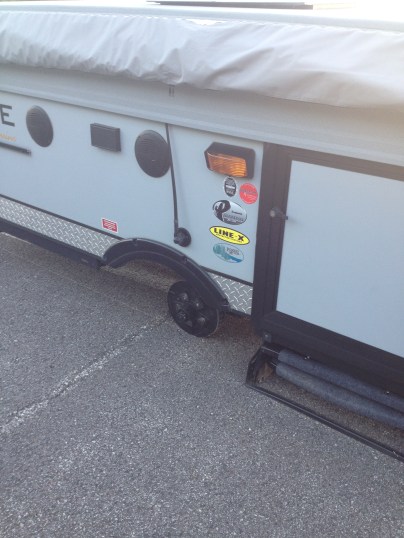
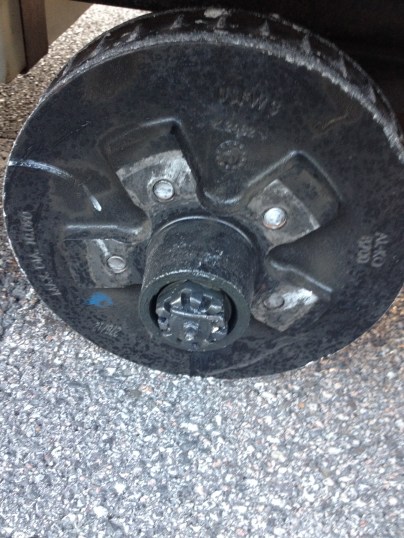
    Since we had a lightweight, easy to tow unit, we began traveling the state with our new camper. On the way home from one of our longer trips (500 miles round trip) we encountered one of those weird things that you think could never happen to you. We were less than 10 miles from home, recounting our weekend, making plans to unpack when all of a sudden we felt the truck pull and I saw simultaneously a tire bouncing into the sky and sparks engulfing the pop-up. When we got pulled over and stopped it was apparent we had lost a tire, lost the step and we were not getting the camper home without a tow truck.
     Iphone4SSeptember 2014 617
    Normally, you would have the camper towed to the dealership you purchased the camper from. This was not possible in our case because we our dealer was 5 1/2 hours away from home and additionally, there were no local authorized dealerships for the pop-up that we had purchased. I made a split second decision to have the camper towed to a nearby dealership, the same dealership that The Todd family used to purchase their camper. Can you imagine their surprise when they arrived for work on Monday morning to find a broken pop-up camper on their door step!
    After evaluating the damage, the shop told us that we were going to need a new tire, wheel, stairs and other miscellaneous parts. On the surface it looked like the damage to our camper was caused by loose lug-nuts but the seasoned service men saw through that and noticed that our brand new lug-nuts sheered, likely from defective parts. Although this particular dealership didn’t handle the brand of RV we had, they called the dealership where we purchased the camper from, reached out to the manufacturer and after many phone calls and an appeal or two they got the entire repair covered under warranty.
     Iphone4SSeptember 2014 618
    It took a couple of weeks for the manufacturer to send the parts and another week or so to for the shop to get the parts on to the camper. The whole ordeal took a little over a month. We did not even miss a single scheduled camping trip! That being said, we couldn’t have been happier with how the local shop went to bat for us and got the repairs cover under warranty. When we picked up the camper, one of the owners of the dealership showed us the work that was done and while he was getting us the paperwork, I made sure he knew how much we appreciated his shop manger working with the manufacturer to get the repairs done under warranty. I also told him that the next time we were in the market for a new camper, they had earned our business.  I mean if they work that hard for you when you didn’t even buy the camper from them, how hard will they work for you if you if you do?
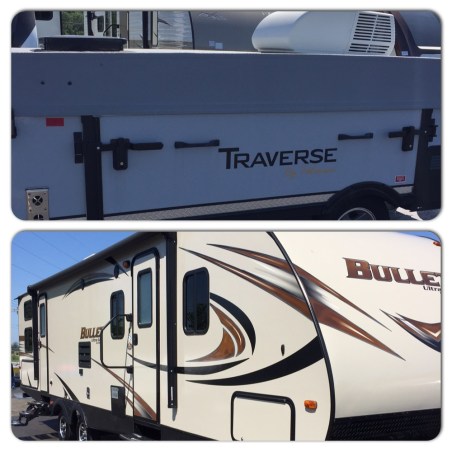
    Fast forward several months… The wife and I just stopped by the dealership to just “look around” and BAM! We found ourselves the proud owners of a brand new Keystone Bullet with two slides, a bunk house and an outdoor kitchen.
    IMG_5916
    Since then, we have returned to “our” dealership a few times: once to get our hitch adjusted, to buy tools to winterize, and once to get some minor repairs made to our new camper. Every time we go in, we feel more at home. The salesmen and the owner know us, maybe not by name, but they knew who we were and what camper we bought. It was really nice to be recognized and we loved being ask about how we like the new camper and where we have taken it camping and about future plans. Of course we love talking about camping nearly as much as we love camping!
    Let me be very clear, not everything was roses with our purchase from the local dealership. We did have some issues that arose that did not settle with us. In fact, we were pretty annoyed a few times. However, they recognized the errors, they apologized, and made efforts to compensate us. In the end, our positive experiences have by far outweighed our unpleasant experience.
    This past January, attempting to take the edge off of the cabin fever, we attended our local RV show with The Todd’s. After we got there we also ran into other friends we often group camp with. Of course our favorite dealership was there, their sales team exited to show off their latest models and shiny new campers. They made huge efforts to introduce us to the manufacturer representatives so that we could ask any questions we had about the new models, but they also wanted to make sure we had the opportunity to give them our opinions and feedback. Again, we left feeling as though we were valued customers.  The owner of the dealership also made sure our daughters were well taken care of by supplying them with snacks and water. I think he might have earned the business of a couple of future RV buyers!
    We’ve purchased campers from private sellers, from a dealership that was located a long way away, and now from a local dealer.  A dealership is more than just the sales department, or finance department, or service center, or parts department. It is all of those things at once.  So, if your path to RV ownership leads you to the doorstep of an RV Dealership remember that you are embarking on a relationship that will last the life of the camper not just the duration of the sale. And just like any other relationship, there can be positives and challenges. Try and look at the totality of the entire relationship.  Over the past year, “our” local dealer (Liberty RV in Liberty, Missouri) has defiantly earned our trust and loyalty.
    Wayne
  • Purchasing A Used RV

    Have you been thinking of joining the RV community?  Besides the different types of RV units available and deciding what will best fit your needs, you also have to navigate whether to purchase from a private seller or a dealer. We have done both and want to share our experiences with you to help make your RV ownership go as smooth as can be. Today’s post will focus on private sellers.

    Our first three RV’s were purchased from private sellers; two of which where found on Craigslist. Craigslist can be a very useful tool but it is also full of scammers. Learning to spot a scam will help you weed out the ads that are “too good to be true” and focus on the potentially good deals that are out there. Craigslist also takes diligence; if you do not see what you like in the beginning, keep looking.

    Buying from a private seller can be a positive experience for both parties. As a buyer, here are some tips that can help ensure you have a positive experience.

    Determine The Weight of the Camper:

    The weight of the camper is an important consideration. The seller should know the weight but if you find they are vague with the number do some research. Assuming the owners manual is long gone, campers usually have a metal tag on them with the weight information. The internet is another resource to help you determine the weight of the camper. Dry weight is the amount the camper weighs off the factory floor. Gross weight is the amount of weight the camper typically weighs, with empty tanks,  loaded with all of your belongings and is a more accurate number for towing.

    Know Your Tow Limitations:

    Probably the biggest mistake a person can make when buying a RV unit is to not know the limitations of their tow vehicle.The owners manual is a good place to start but researching online will take that one step further. There are several factors that can impact how much weight your tow vehicle can handle. These would be additional considerations: the age of your vehicle, if your vehicle has a tow package, or does it have mirrors made for towing.

    Set it UP/Hook it UP!

    If you are looking at pop-up campers, set the camper up. Make sure all the cranks work, the latches latch, the stabilizers come down, the support arms support, and make sure the canvas is in good condition. The same is true, except the canvas part, about travel trailers.

    The next thing would be to hook everything up. Do not buy a RV unit without knowing that the electrical outlets have power, the lights illuminate, the air conditioners cool, the heater heats, and the water lines have no leaks. Check the manufacture date on the batteries. These are important things you want to know before you decide to buy.

    The bottom line when buying from a private seller is this simple fact: Unless you are a buying a newer RV with a transferable warranty, RV’s from private owners do not come with any type of warranty. If something is wrong and goes undetected that is on you and the expense of fixing that is on you.

    Cash or Finance/Clear Title or Lien

    There are a few last considerations that are helpful to have worked out before making a decision to buy. Will this purchase be a cash transaction or will you need to secure a loan. If buying from a private seller with cash, be sure that the you’ll get a clear title without a lien holder. If you are financing the purchase you will find that loan terms for RVs are not like terms for automobiles. It’s not uncommon to find loan terms from 12 to 20 years, depending on the cost of the RV. Also, be sure to check with your tax adviser,  some RV loans are tax deductible!

    These are our few simple tips that we hope you find helpful. If you have others, please let us know!


  • Vintage vs. New

    Vintage vs. New

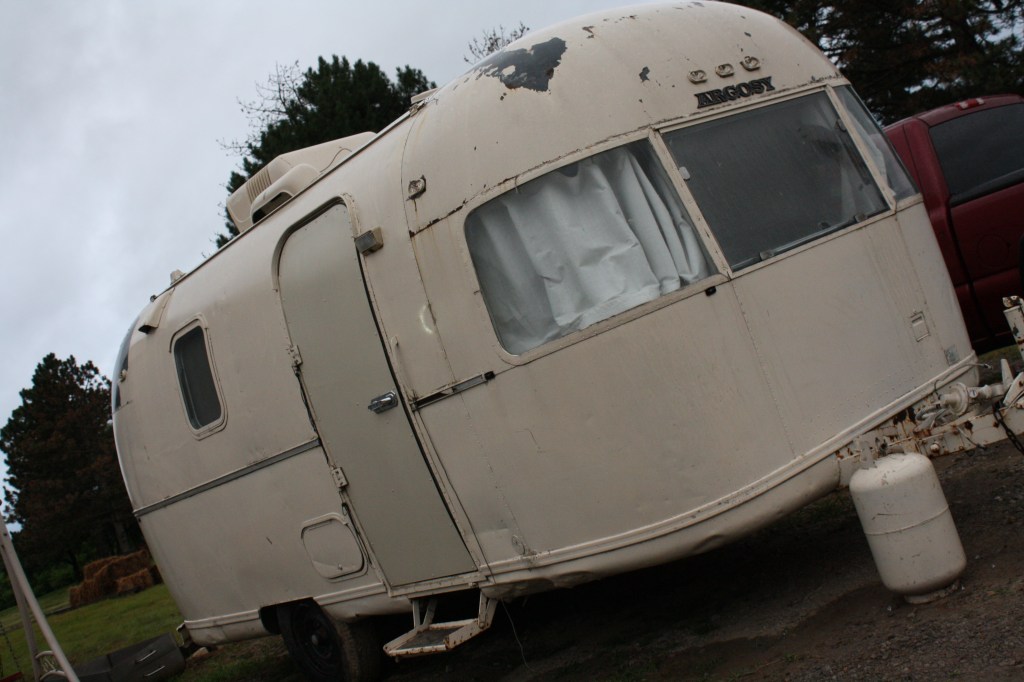
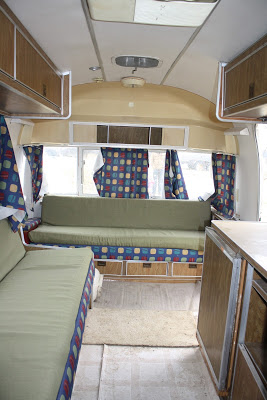
    The very first camper we ever owned was a 1972 Argosy. I purchased it from a relative who had it sitting in a field being used as storage.  It was pretty banged up and needed some work but I was hopeful and in love with the yellow camper we were rolling home.

    Rehabing the Argosy turned out to be a different reality. While there were some amazing things about the Argosy, the camper needed a complete tear down Wayne and I just did not have the know-how or the time to learn how. Wayne seems to think if we had a garage large enough for the Argosy, we would have worked on it year round. However, in hind sight I think we wanted that to be true.

    We sold the Argosy a few years ago. It did get rehabed, but not by us. At times I have missed the idea of owning it. I still get weak knee’d anytime I see a vintage camper. We have gone on to own four campers since then.  Wayne just rolls his eyes. Our truth is, I doubt we ever own a vintage camper again. Below is a list of reasons why I believe this to be true for us:

    Safety. While vintage campers are all the rage, owning one should come after careful consideration.  When I think back to us hitching up that old camper after it had sat in a field for years, not knowing the condition of the tires or the wheel bearings, I am honestly thankful we made it the hour drive home. When hauling a vintage camper, or any camper for that matter, you have your own safety and the safety of everyone else on the road to think about.

    Size. Is it me, or are vintage campers small? Yes, I have seen some larger Airstream’s or Avion’s but the majority of what I see is under 20 feet.  This makes them lightweight and easy to tow but it means they are just not designed for families. Children come with stuff and stuff is what they bring camping. Over time, we have learned to accommodate the younger humans in our life. Simply put we need storage; inside the camper and out.

    Holding Tanks.  Holding tanks are another huge difference between vintage campers and modern campers. The Argosy had a fresh water tank but  no grey tank. If it had a black tank it was long ago nonoperational.The grey water just ran out onto the ground under the camper (something highly frowned upon in many parks).  In order to utilize the bathroom, The Argosy had to be camping with full hookups.

    There are three main conveniences of RV camping that are basic to us: a bed, an air conditioner, and a bathroom. I do not know a single person who RV camps who  honestly likes waking in the middle of the night and having to walk to a shared campground bathroom. Children intensifies the need for an operable bathroom in the RV

    July 2010 060

    DIY Dream or Nightmare: Some people like to tinker. For those who do like to tinker they get a lot of enjoyment out of giving new life to something long ago set aside as junk. I would guess that for these folks, their destination is their path or journey.  For us every time a light stopped working, or a water leak sprung up, or the trailer brakes stopped working, or the toilet seals began to leak it was just another thing that was keeping us from our destination; camping and enjoying the great outdoors. Wayne spends a lot of time doing things to our new camper but never fixing anything that has to be fixed. I think he likes starting with a new “clean” slate. Knowing that when we hitch up things are going to work on the inside and outside of the of the trailer brings us peace of mind.

    I so admire those people who rehab old campers and give them new life. I so wanted to be one of them but the reality is, I am not and I probably never will be. I am okay with that. Thanks to several RV manufactures, you do not have to rehab and old camper in order to have a retro camper. Manufacturers like; Paradise CoastRiverside, and even Shasta RV have created or re-created new RV’s with the look and feel of retro campers with modernized with today’s convenience. I know this is the path I would take if we were purchasing a smaller camper.

    Deciding between a vintage camper or a new camper is certainly a personal choice. Safety should be your first consideration.If you find a vintage camper in a field, like we did, you really should consider how long that camper has been sitting before you tow it home.  Your second consideration should be your personal needs. Do you need hot water, or holding tanks, or simply is it big enough for your needs? The final consideration for you to consider is the the amount of time, effort, and money you will spend fixing the camper up for your use.