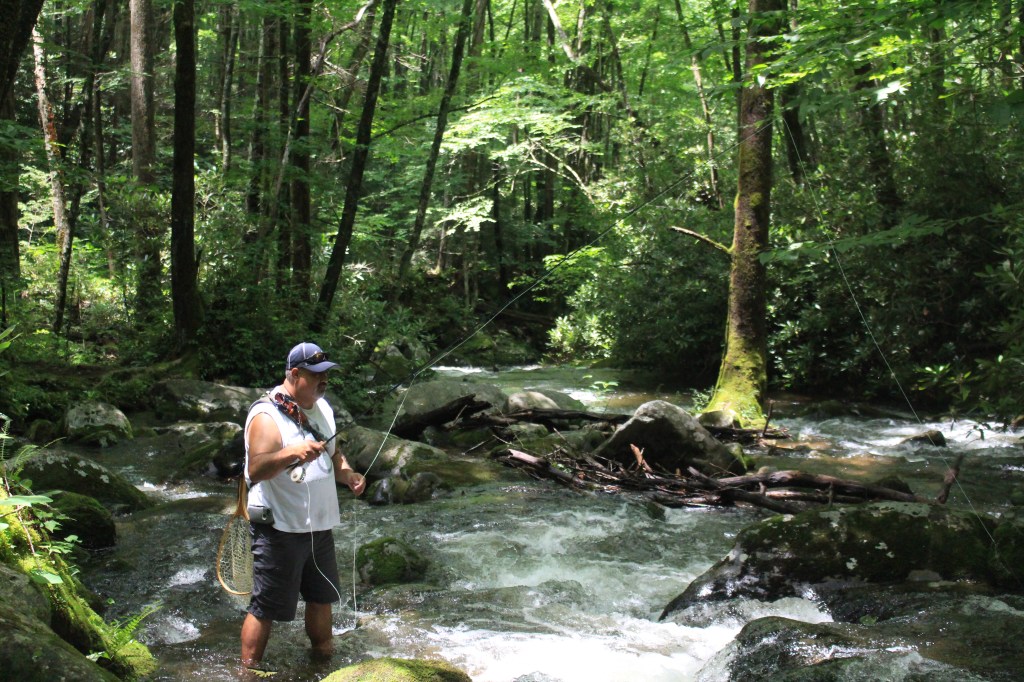
I consider myself a fly fisherman. I’ve been fly fishing for roughly 15 years, my dad and uncle taught me in the cold clear water of upper Lake Taneycomo, just below Table Rock Dam. I don’t consider myself a great fly caster, but I’m a really good fisherman. Like my dad, I can cast just good enough to be an extremely successful fisherman. We can usually go anywhere in Missouri or Arkansas and catch a ton of trout. We normally fish in tailwaters or trout parks. I know… trout parks are not REAL trout fishing but that’s the trout fishing we have available in our area. Here in our tailwaters and in our parks I’m a really good fly fisherman. I know where to go, what to use and how to fish. I research and study techniques and equipment, 90% of the time, I’m successful at catching trout. I’ve taught several others how to fly fish. I tie nearly all of the flies I use. Even the guys I fish with use the flies I tie and they catch a ton of fish. In my world, I can hang with the best of them. I make it look easy. I feel like I’ve mastered my craft. That is until our visit to the Great Smoky Mountains.
Like any fly fisherman worth their salt, I did my research. I put Google through its paces, I looked up non-residence licensing requirements, I searched for where to go, what flies to use and how to fish them. I poured over online fishing reports and where to find local resources all in close proximity to where we were going to be staying in Townsend, TN. My online searches lead me to the following conclusion:
There are 1,001 places in or around Townsend, Tennessee to fish.
Armed with that knowledge, I moved onto Plan B; wait until we got to Townsend and talk to the natives. From where we set up camp at Big Meadows Campground, the local fly show was less than a mile away. At my first possible opportunity, I headed to the Little River Fly Shop.
I walked in and was immediately greeted by a couple of the guys working in the shop. This is a tourist town, so I didn’t really even have to explain my situation; they talk to 50 guys a day just like me. The first question they asked me was if I was planning on fishing inside or outside the national park. As they explained, fishing outside the park in the Little River in July was a challenge because of the tubers floating down the river, plus it required an additional $30 for a Tennessee trout stamp. A trout stamp isn’t required when fishing within the national park. They also explained to me that the trout in the Little River were stocked Rainbow Trout and most of the fish within the boundaries of the park were Appalachian Brook Trout. So, that made my decision easy, I can catch stocked fish at home, I wanted to go after the native species, so I told them I’d fish inside the park.
Now that we determined that, he focused in on where inside the park I should go. He brought out a map, and being totally unfamiliar with the area, it took me some time to get my bearings. He started marking up my map with some yellow highlighter and telling me everything I needed to know. I was on information overload! I walked away from that conversation with a few simple guidelines: first; the higher you go the better the fishing is. Second, wild fish spook easily so presentation is everything. Third and finally, keep moving, cast a few times and move upstream. Armed with my new guidelines, I bought some flies, a Tennessee fishing license and I walked out feeling ready to go.
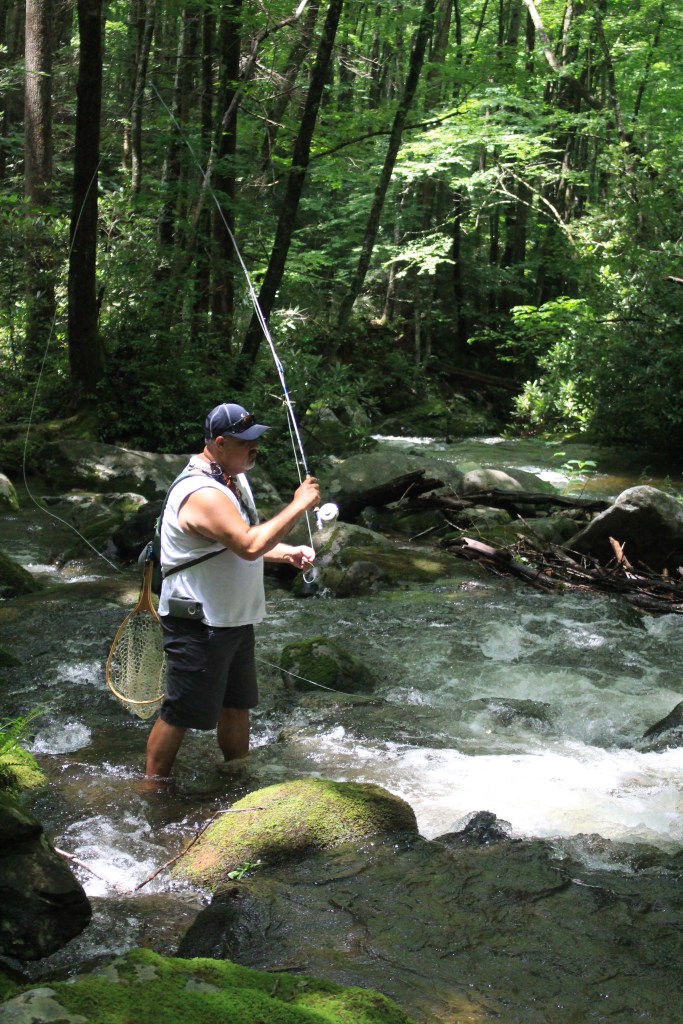 My first venture fishing in the Park was on a hike with the family. I brought along the fly rod and we started hiking up the Middle Prong Trail and fishing the Little River. This trail has a steady rise in elevation and for the most part, the Little River runs right along the trail. Although there were numerous places that had very easy access to the river finding a good spot to fish proved to be difficult. Due to the heavy rains the night before, the water was rushing through this narrow river. I stopped in a few places but the water just seem to be running too hard to get a drift going and forget wading; the rushing water and extremely slick rocks made it difficult to keep any sort of footing at all. After nearly falling in the rushing water more than a few times I gave up. I was done. I did enjoy the trail and the hike very much. The Little River is a beautiful stream and full of little water falls.
I did realize that fishing in the mountain streams were a whole lot different than where I usually fish. I fish in wide, deep, slower moving tailwaters and streams. These require a long casts and a good long drift. Usually, you can stand and fish in the same spot for a long time. The river beds where I’m from are often sandy, gravel or rocky bottoms that are fairly easy to stand and move traverse. In contrast, the mountain streams are narrow, shallow, and fast moving. The rocks in the river bed range from pebble sized to boulders. Most have been rounded smooth by thousands of years of erosion and they are slick. I know rocks in water are usually slick, but these are crazy slick. Round rocks and river slim make walking in the river downright dangerous! Or, you could be walking along on some rocks and all of a sudden you can step into a crack that can swallow your entire leg. I learn rather quickly that mountain stream fishing is totally opposite of fishing the way I fish.
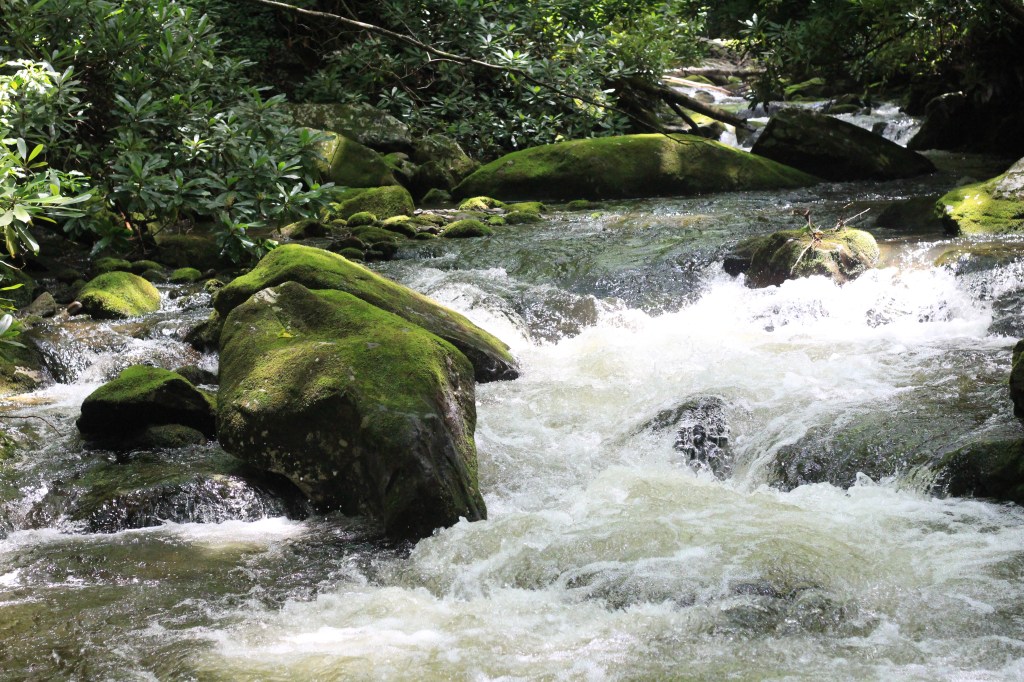
Casting in a narrow mountain river requires extremely short casts. The guide at the Little River fly shop said to make about 3 casts in a spot then move upstream. In this fast narrow river, that takes approximately 30 seconds. The features in the river that hold fish are short and with the fast moving water a drift is over in seconds. So you are constantly casting and moving. The problem is, if you are not used to moving over that type of terrain, it can be extremely difficult.
I gotta tell you I was kind of surprised at the difficulty I experienced in fishing in the Smoky Mountains.
The next evening, the whole crew went for ice cream. I was standing in line behind a guy that I could tell, just by looking at him, he was a fisherman. So, I struck up a conversation with him and sure I was right, he was a fisherman! He said he’d grown up in a town near by and had been fishing the Smokies all his life. While we ate our cones, we talked about: fishing, fish, and trout. By the time the cones were gone, we had plans to meet up the next morning and go fishing. His name is Brandon Carr, he’s a softball coach with a passion for fly fishing and the Smoky Mountains. Some of you might find it odd that I made plans with a relative stranger to go fishing but my gut told me Brandon was good people. My gut is seldom wrong and it was not wrong about Brandon.
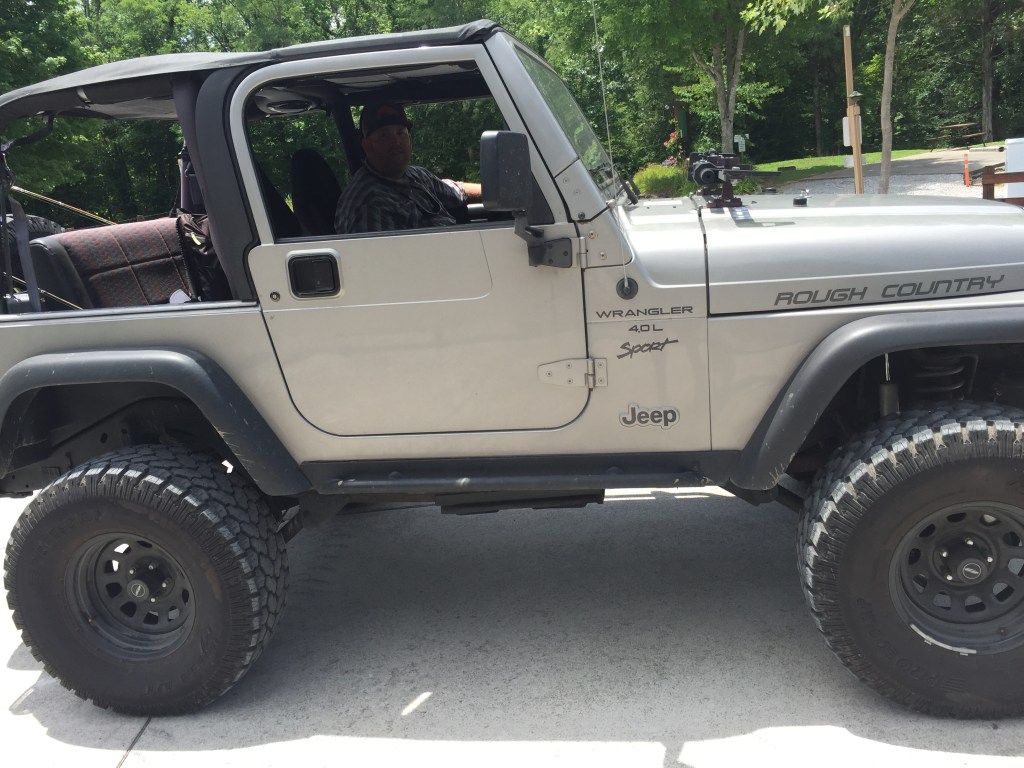
In the morning I met with Brandon and we took the short drive to the Middle Prog Trail head, exactly the same trail that we had hiked and “fished” a couple of days before. (By the way, there is nothing cooler than riding into the mountains in a Jeep!) We parked the Jeep and started hiking up the trail along the stream. Now, I’m not the fittest guy in the world but I’m no couch potato either. I try to stay active by doing a little jogging, bicycling and we like to hike. But trying to keep up with Brandon took serious effort. What was cool about hiking with him, was that it was like having a person tour guy for the Smokies. I learned a lot of history about the logging company and how they used the stream and other resources available to them to move giant logs from the top of the mountain to the bottom. We even paused a few times to look at different artifacts left behind by the loggers such as an old Cadillac and some rigging that helped anchor cables for moving logs. Most of which I would have missed if he had not pointed them out. As Brandon effortlessly bounded up this trail, I was happy he was doing all the talking and so I could just concentrate on keeping up. I’m not exactly sure how far we hiked, but I’m pretty sure it was close to three miles before he even suggested we wet a fly. Just like the guy the fly shop said, the high you go, the better the fishing. We also talked about what flies to fish, how to rig the flies and how to fish them. Pretty much exactly what the guys at the fly shop said. I was surprised to see how different the stream looked compared to the just two days before. The water was much clearer and the stream had slowed considerably. With the water not moving as fast, I thought that traversing the stream would be easier, boy was I wrong.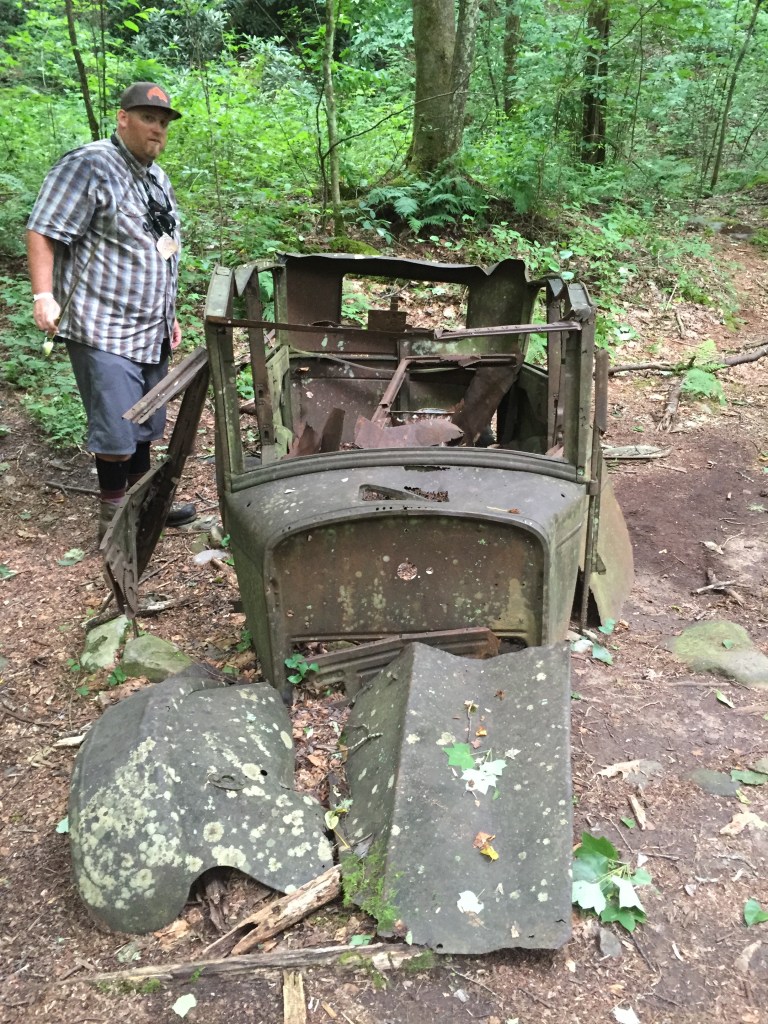
I started to cast and move, like I was supposed to… and wham, I caught a snag on the other side of a large pool and lost my flies. I survey the damage and discover I needed to retie my tippet as well as the flies. As I go to snip my 6x tippet off the spool, I realize that I can’t see it. Now I know I’m getting a little long in the tooth and it won’t be long before I’ll be needing to carry around reading glasses with me everywhere but that time has had not yet come for me. Well, not until THAT day. By this point the sun was up, it was a bright sunny day, or as far as I could tell it was… The thick forest canopy was filtering out some of the sun light. I don’t know a lot about the spectrum of light that the sun emits, but I can tell you that the forest filters out the light that allows a human to see 100% fluorocarbon tippet. As I went to tie on my tippet, I could see the leader, but the tippet just wasn’t there. I could feel it but I couldn’t see it. It was like it was under some sort of evil spell of invisibility. I guess it was pretty obvious that I was struggling, because eventually Brandon came over and help my tie my flies on.
 With my rig finally being good to go, I was ready to get back to fishing! I got back in the water, because that’s is how I knew to do it (and how we do it back home…in the water. I struggled to keep my footing on the rocks, making my casts and moving. Pretty soon, I began to realize that between the hiking and wading I was exhausted. Every time I’d look up to see Brandon, he’d be way up stream. Which is good, because I didn’t want to slow him down and I didn’t really want him to see just how badly I was struggling at just standing! I decided to rest a little and just watch Brandon fish. I was amazed at how he moved along the stream and fished. Not in the water like I was attempting to do but on the rocks, pausing to cast in the shallowest of features and moving quickly. Brandon’s not a small guy, but he leapt from rock to rock with the grace of a mountain goat. I was amazed at how quickly he could cover the stream and moved onto the next feature to find fish in places that I thought couldn’t possibly hold anything. I also having trouble keeping my leader from being sucked back through my eyelets. In my tailwater world, we use long leaders 7 1/2 to 9 feet to get the fly deep into the water column. As I watched Brandon fish, I noticed that the leader he was using was much shorter and his dropper was not nearly as dropped as mine was. I also watch how he was moving along the stream, not in the stream but on top of the rocks and along the banks, not in the water like I was trying to traverse the stream.
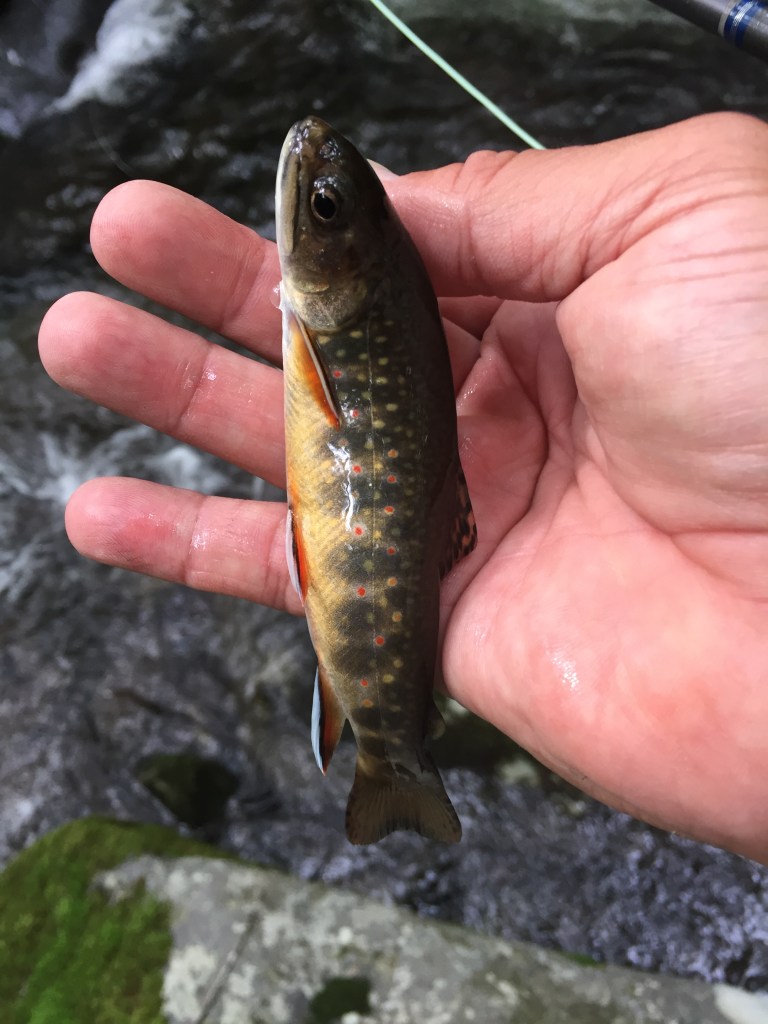
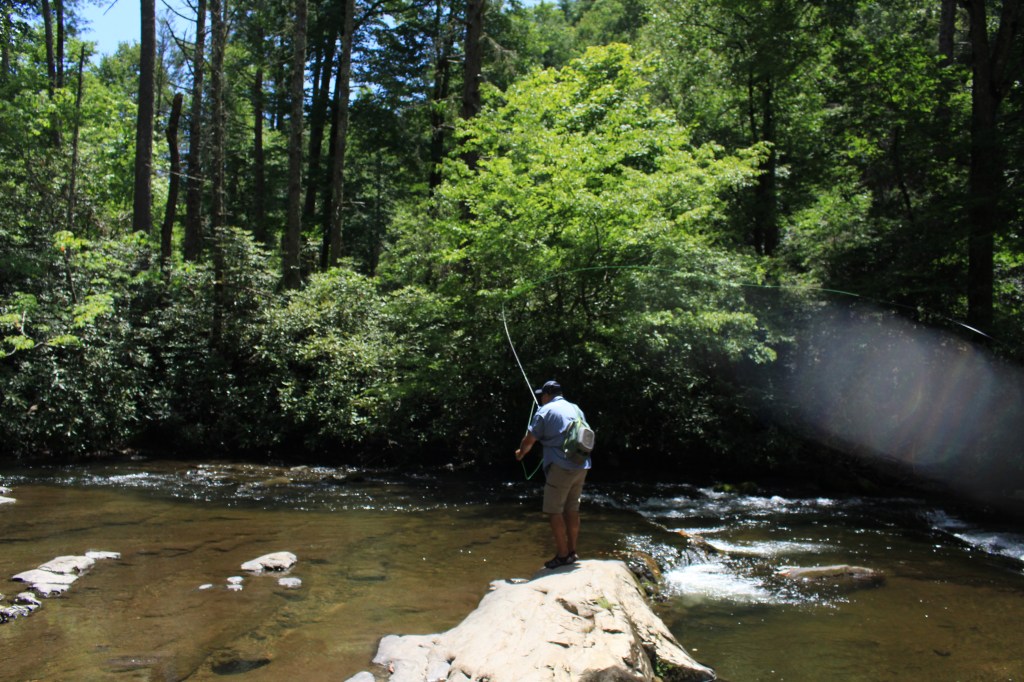 I decided that I had to just stop and reassess what I was doing and how I was doing it. Against my better judgment I cut the flies off my line. I completely retied, fortunately for me, the sun was a little higher in the sky and I was able to see my fluorocarbon tippet well enough to tie my knots. I also tried to move on top of the stream and not in the stream. I fished features, that I thought couldn’t possibly hold fish… and then it happened, I got a strike. And another. And another. Finally I hooked up! I caught a wild native Appalachian Brook Trout. It was one of the most beautiful fish I’ve ever seen. It was small, only about 5 inches long, but to me it was a prize worthy of mounting! I’ve never worked so hard to catch a fish in my life. It was well worth it!
I’d also like to say thanks again to my new friend Brandon Carr for letting me tag along with him. He’ll never know how much he taught me about the Smoky Mountains and catching wild native fish in mountains streams.

Happy Fishing!
Wayne
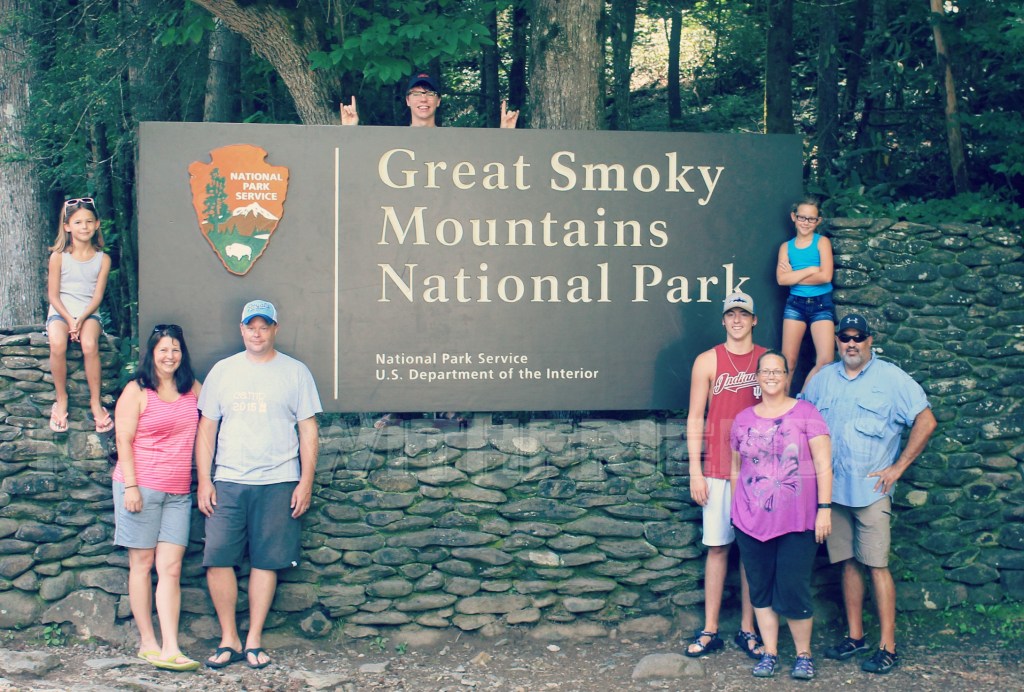 The entire crew traveled to the welcome sign and the majority of them bid us adieu so they could hang out at the campsite and rest. Wayne, The Short Chic and I headed to Cades Cove. Going into this hike, we were a little ill prepared. We had eaten breakfast but had not had lunch. We did not pack snacks (because we were not hungry when we set out). We did not realize Abraham Falls was a 5 mile hike round trip (2.5 in/2.5 out). We did pack several water bottles but if I am honest, I carried in more photography equipment than anything. I give you this background information so you will understand that after hiking the 2.5 miles into Abraham Falls we were HANGRY and to make matters worse, The Short Chic talked nonstop about having ice cream for lunch the entire hike!
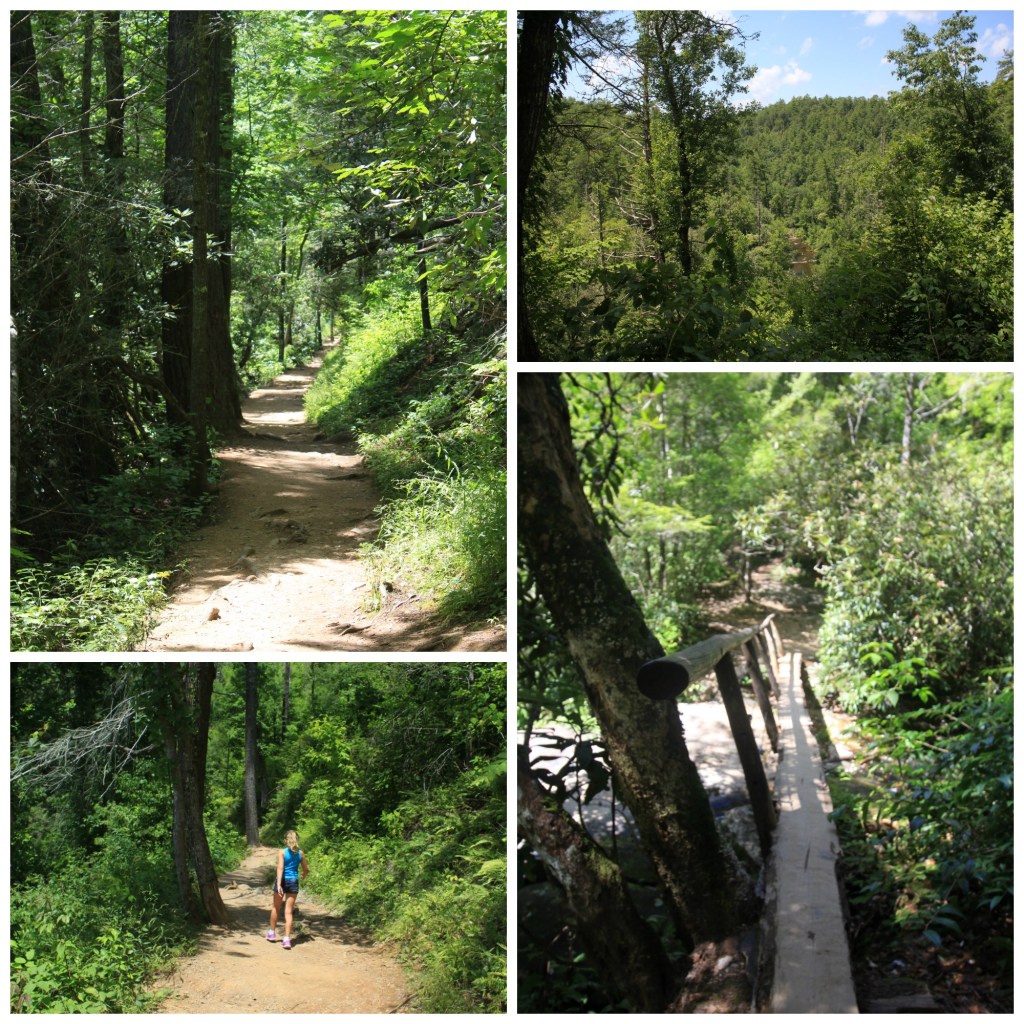 The Abraham Falls hike terrain is rocky, uneven, and generally follows the Abraham Creek although the creek is often not accessible due to the terrain of the forest. Wayne took his fly rod and practiced catching wild Appalachian Brooke Trout any chance he could access the creek. The path dipped and climbed as the terrain did and it took us through moments of no shade/full sun, to the coverage of dense tree canopy and full shade, as well as up and over a rocky ridge. Several times the path took us over offshoots of the creek where we walked over wooden log foot bridges.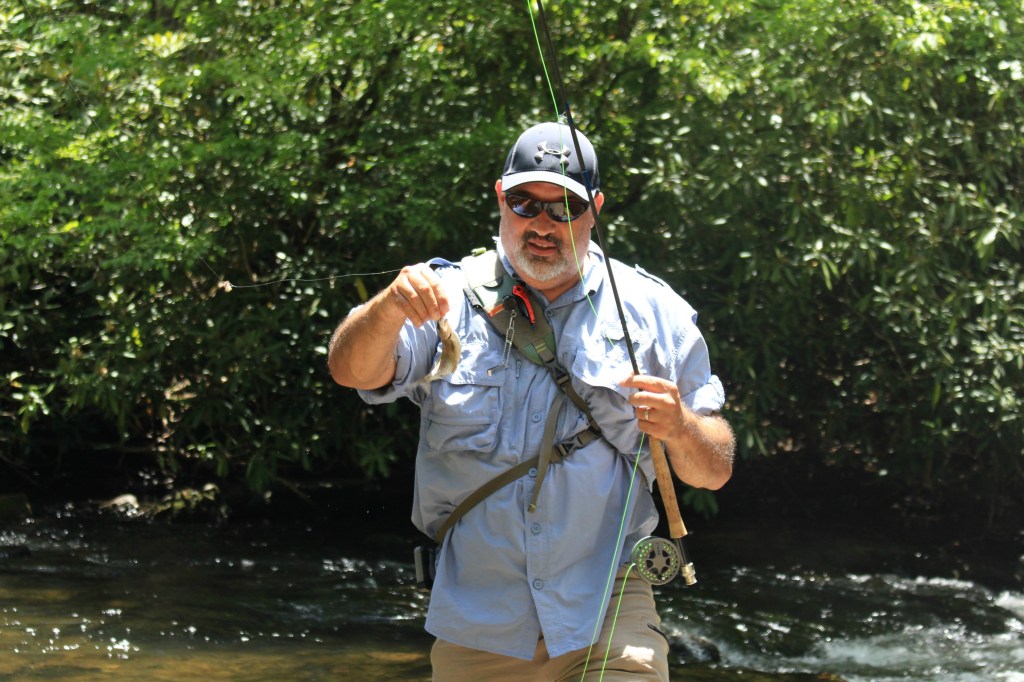
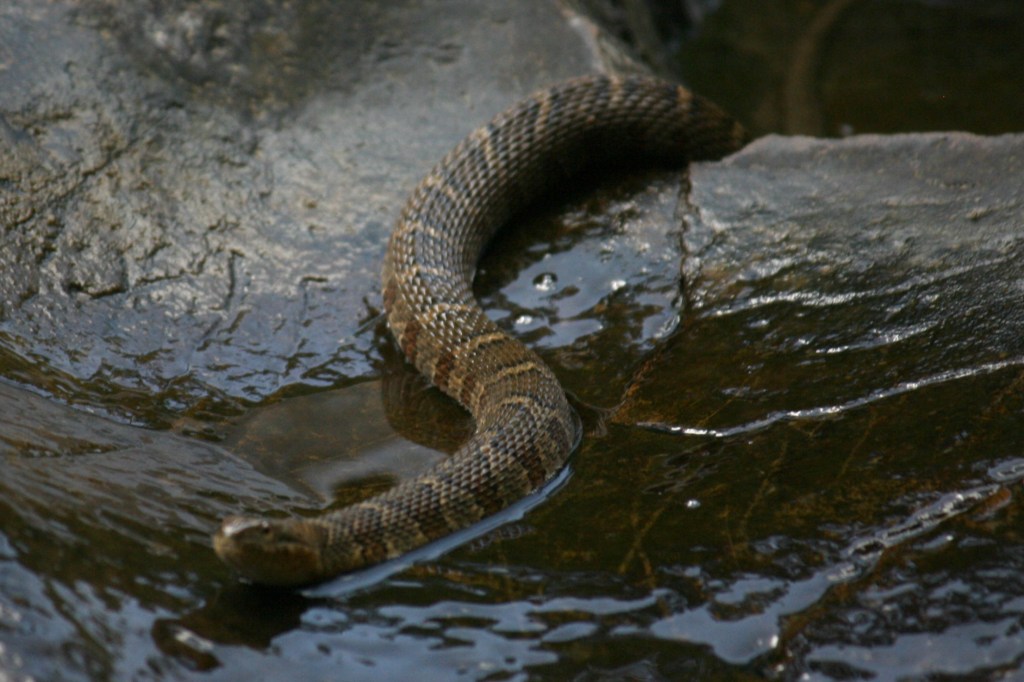
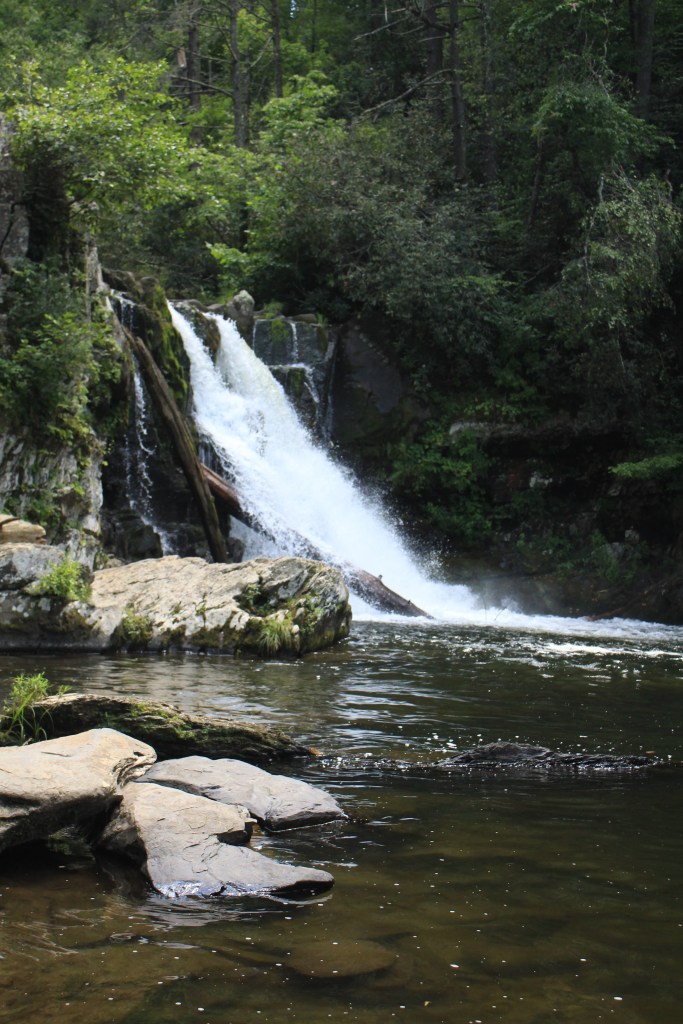 The falls were a welcome site after hiking 2.5 miles! Numerous hikers had shed their shoes and clothing (yes they had swimsuits on underneath their clothing) to wade and splash in the water below the falls. The Short Chic had fantasized about getting wet in the water the entire hike and as we walked up to the waters edge the first thing we saw were dual water snakes! Wayne may have spent some time fishing there but The Short Chic and I got no where near that water and kept a diligent eye open for any additional reptiles during our short stay!
 We chose not to linger for a long time at the Falls, we still had 2.5 miles to go to get back to our car and it was getting late. I think we began our return around 2:45-3:15 p.m.. The Short Chic started making up songs about food on the way back and first Wayne attempted to hush her but I had the thought that it was approaching dinner time….not just to us but for animals as well. We let her sing at the top of her lungs just to make our presence known. We also hiked in a very specific order: me, The Short Chic, and Wayne just in case any predators were eyeballing us and looking for our weakest member.
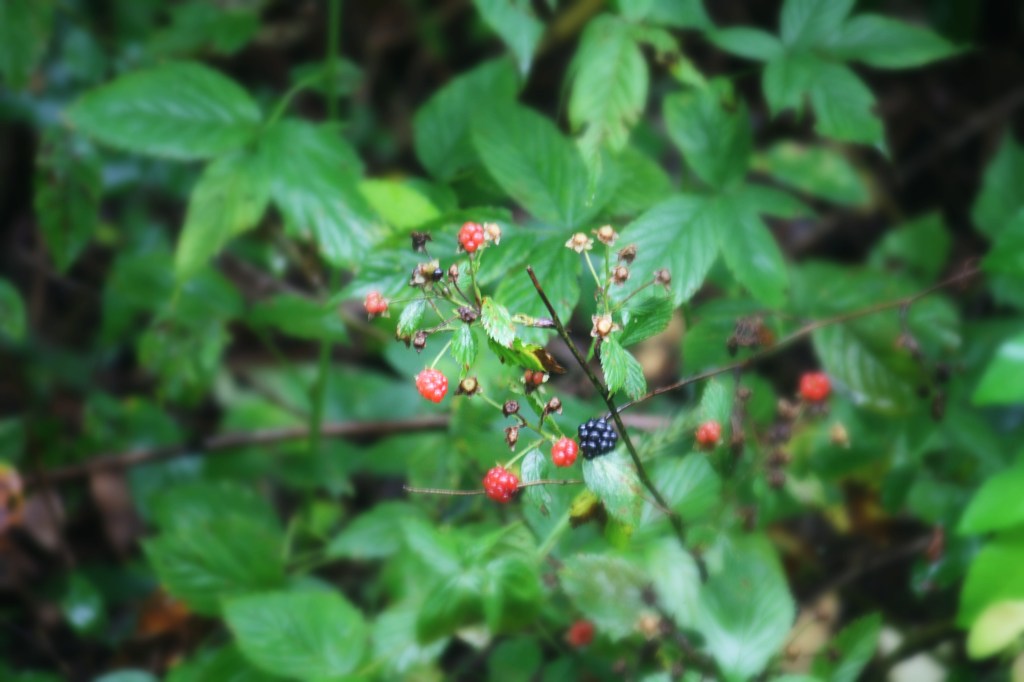 After we passed the ridge line and about 45 minutes into our return I notice some wild blackberries growing along the trail. You should all know that I love wild blackberries and was so hungry that I started picking the berries and eating them right there on the spot. I did notice that the berries were small and most of the larger ones where not yet ripe. As I picked berries for myself, Wayne picked them and gave them to The Short Chic. Wayne spied a larger ripe berry just an arms s t r e t c h off the path and he decided to reach and pick that one berry.
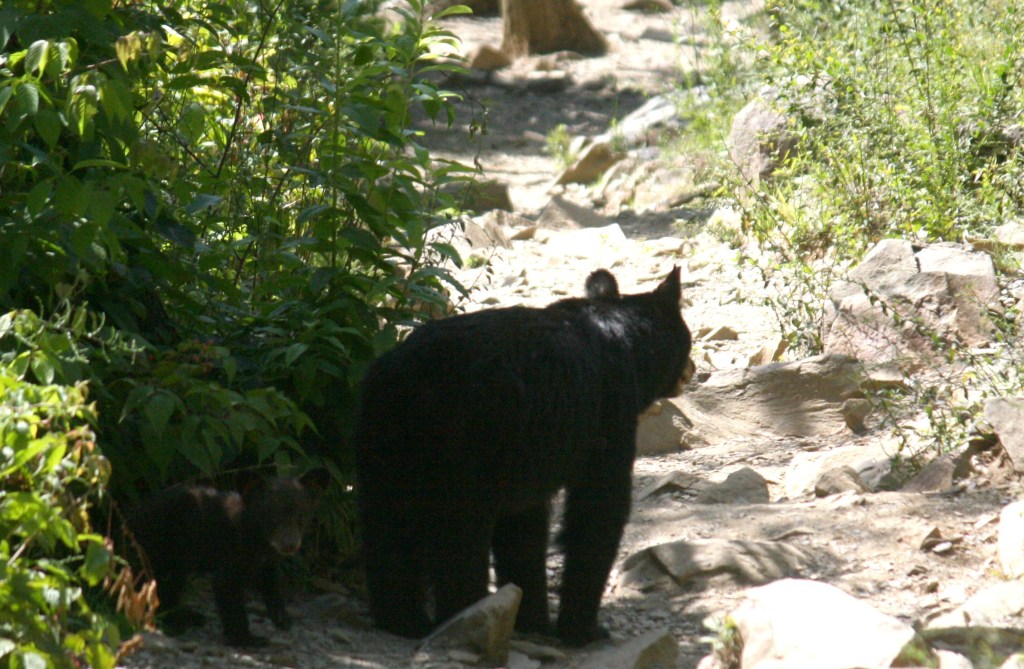 I grabbed The Short Chic’s arm and swung her around me. I stood as close to my husband as I could and in what felt like hours (but really was only a few seconds) we realized that bear had no interest in charging us; she wanted Wayne to leave her berries alone!
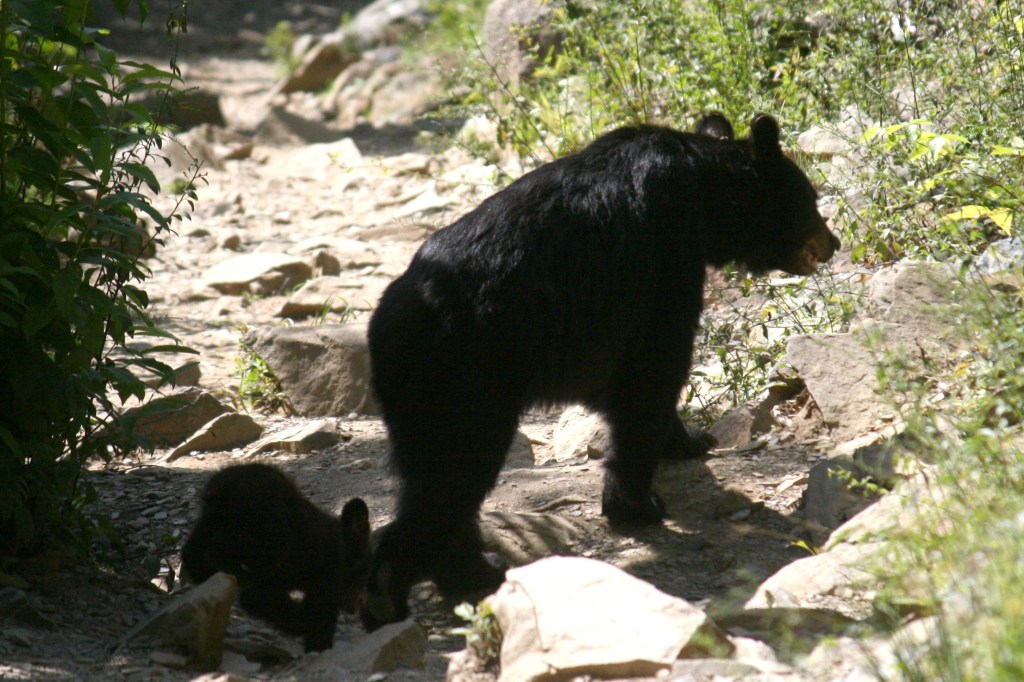 We moved safely up the trail. I am no judge of distance but we put enough space between that bear and us so that I felt safe. Ironically, that bear was completely hidden in the dense forest prior to letting us know she was there but after she gave us announced herself, we watched as that bear shook the living dickens out of the trees and the berry bushes. As the trees were shaking, we stopped everyone who was walking on the trail and explained there was a bear right there and I could see people up the trail hiding around a bend, their numbers growing as well.
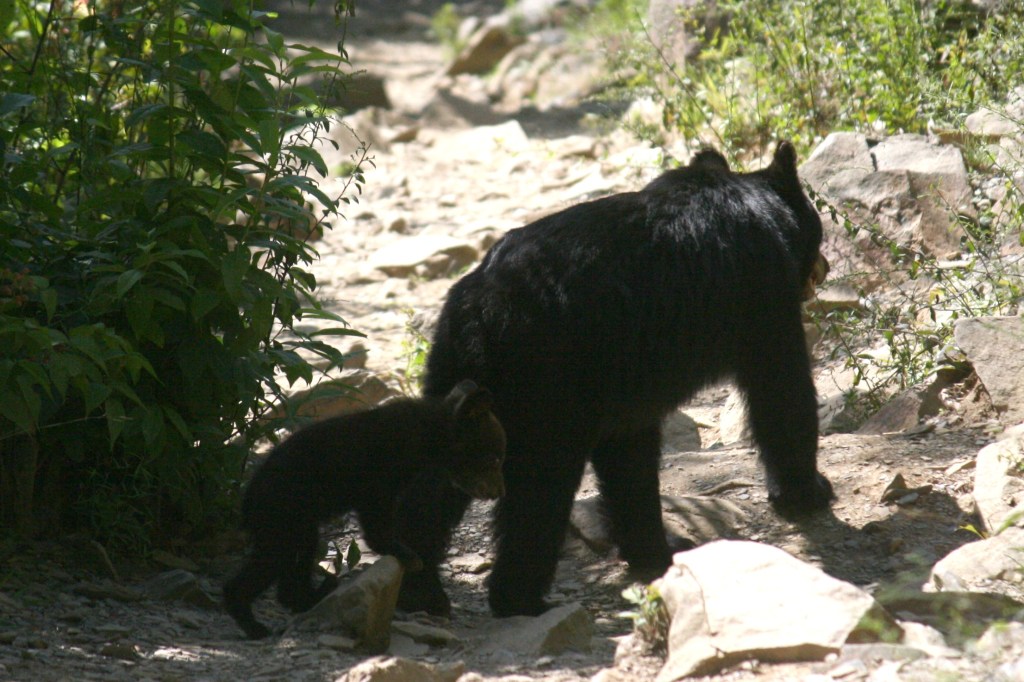
 As we stood in safety waiting for our hearts to stop racing and for us to feel strength in our knees the next part of this story occurred. A baby bear walked down from the hill, crossed the trail, and went into the trees to the bear who woofed. The realization that we inadvertently had been standing/hiking in-between a momma bear and her cub hit us like a ton of bricks.
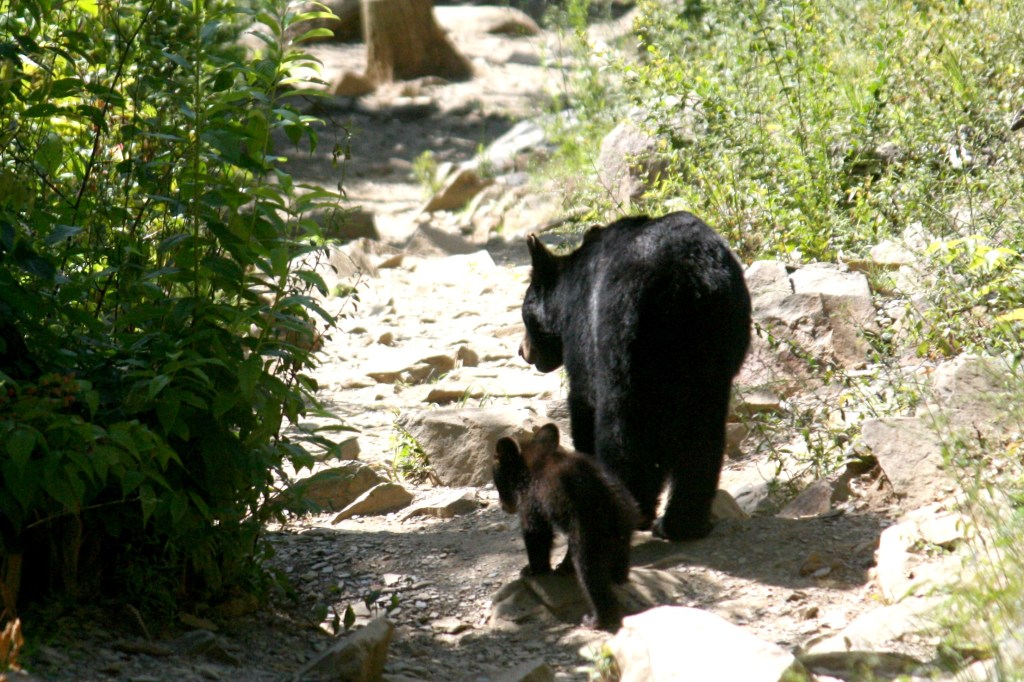 I think Momma Bear had been shaking that tree to knock the berries to the ground so Baby Bear could eat them with ease. A few moments after the Baby Bear joined the Momma Bear the shaking ceased. A few minutes later, both bears walked back onto the trail. Momma Bear never looked at us, she looked up the trail in the opposite direction of us but that Baby Bear turned and looked right in our direction. I had carried all of that camera equipment just hoping to spy a bear and here I was on the same trail and total strangers had to suggest taking photos!
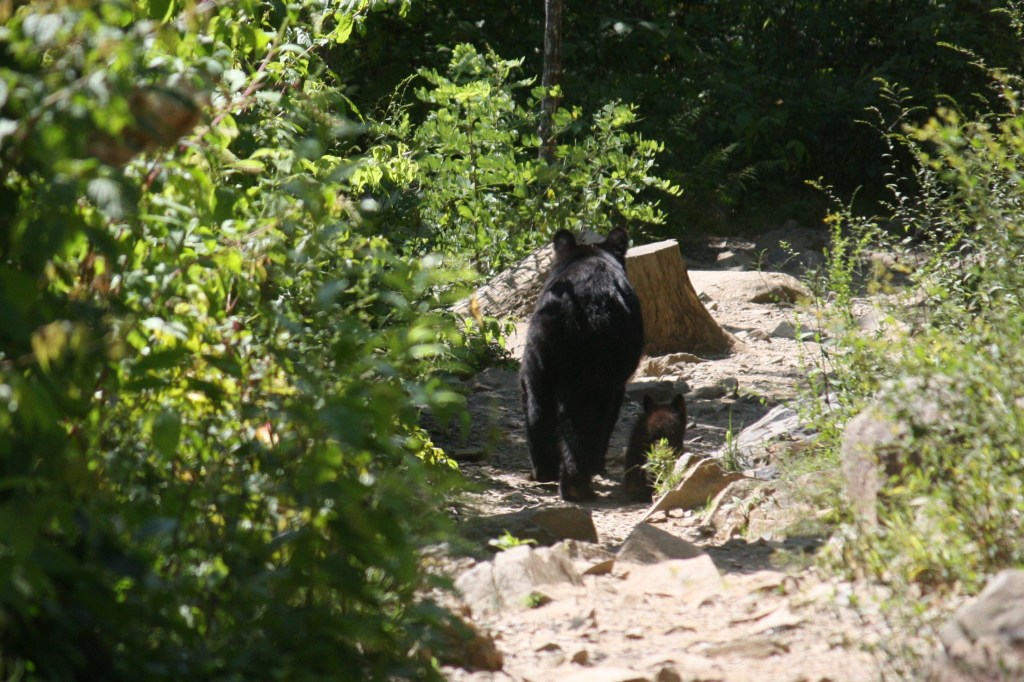 Momma Bear and Baby Bear walked up the trail away from us. In fact, just as they were reaching the bend with all the hikers hiding they turned to the forest and walked off the trail to not be seen again. It was as if time held still. I have no idea how long we all stayed in our safe spots before finally one of the hikers behind us came around the bend. I signaled where the bears had left the trail. He made it by safely so the masses decided to get finish the hike and get off the trail.
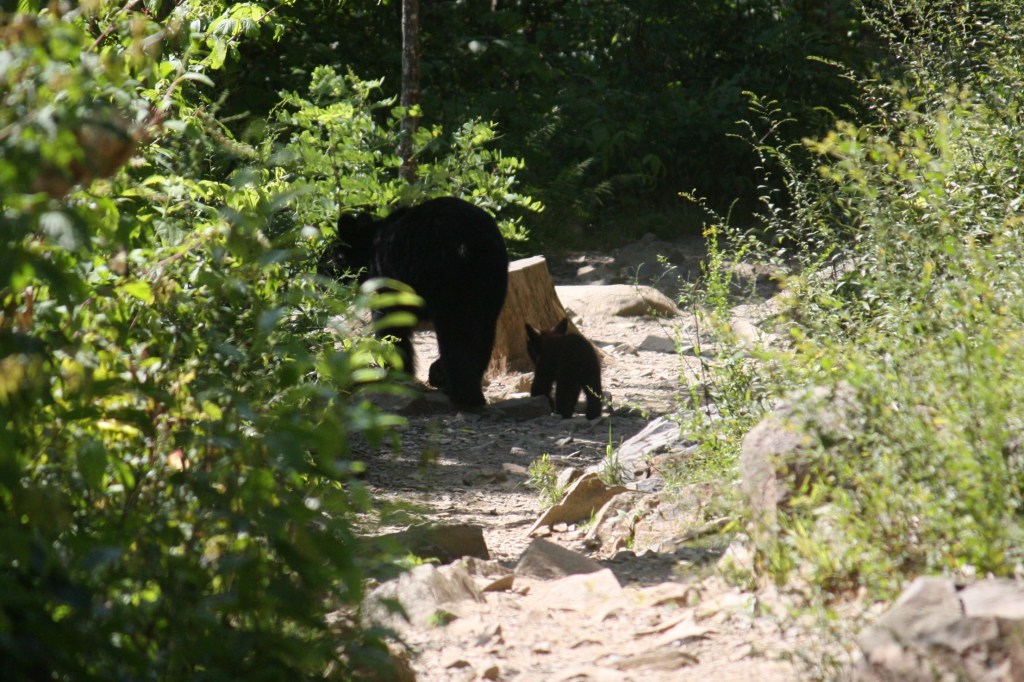 The Short Chic never got her ice cream for lunch. By the time we got back it was nearing 5:00 p.m. and time for dinner. We met the rest of our party at PawPaw’s Kajun Kitchen in Sevierville on Wears Valley Road for some of the most amazing cajun food I have ever had. As we told our friends our story of the bears we guzzled sweet tea and munched on boudin balls and catfish. There was a lady sitting behind me who kept advising me on the menu so I struck up a conversation with her. Turns out she was the owners Momma visiting her daughter from New Orleans. Her accent was thick and she was a delight! I gave her every opportunity to take credit for raising such an amazing cook but she never once did. We ended the night with the white chocolate bread pudding and left that place happy that the bear did not eat us so that we could enjoy such amazing food!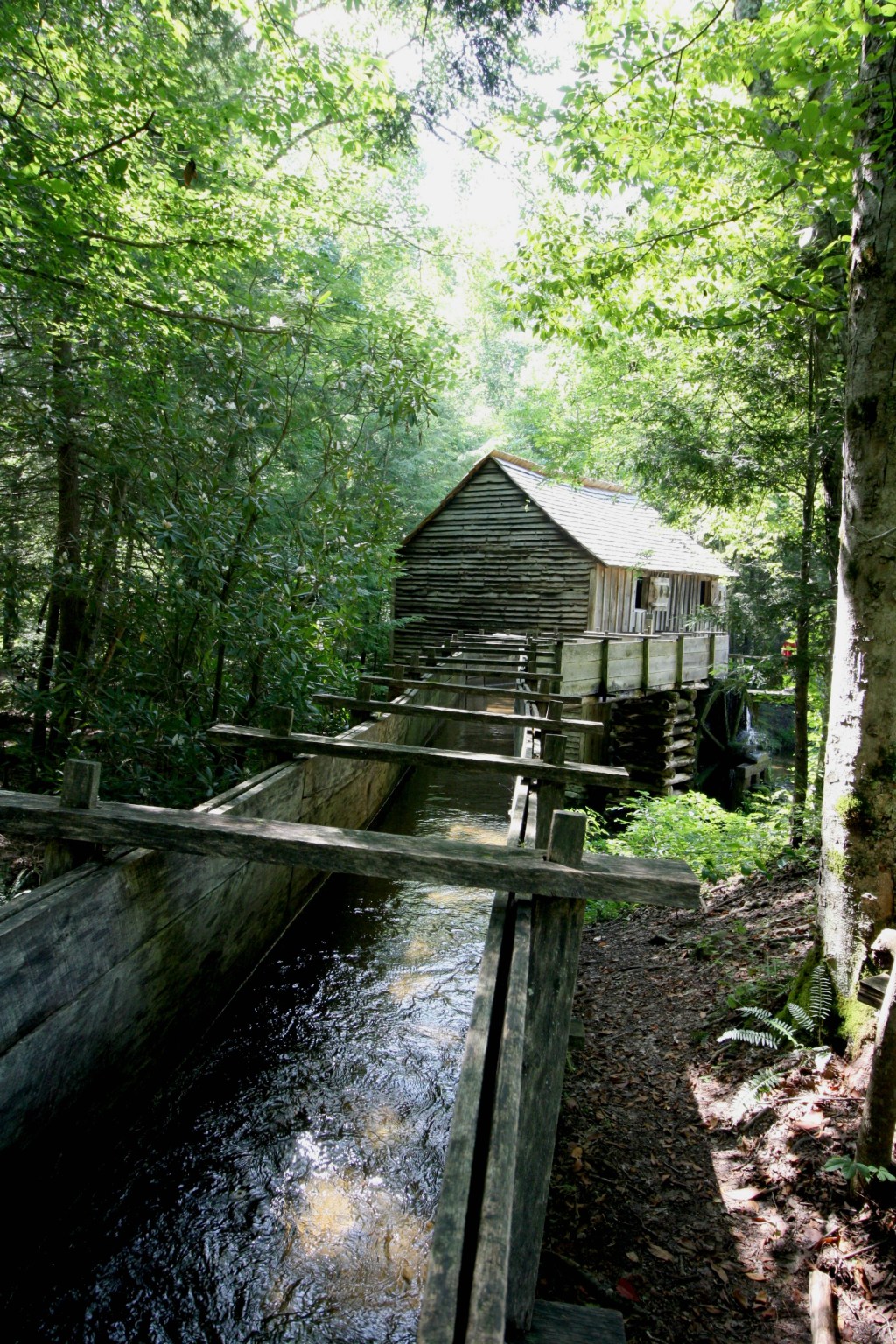
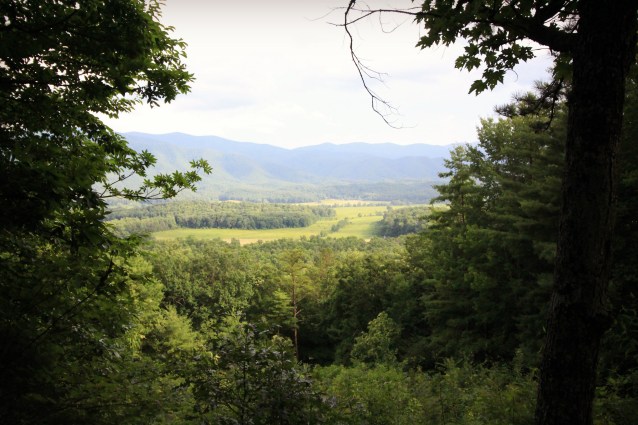 When it comes to mountains, my entire frame of reference is the Rocky Mountains. I do realize that the Ozark Mountains are in my own home state and I have visited them before and they are amazing. But the Rocky Mountains were my first mountains and will always be my frame of reference to all others. (Maybe this is why I gloss over the Ozark Mountains?)
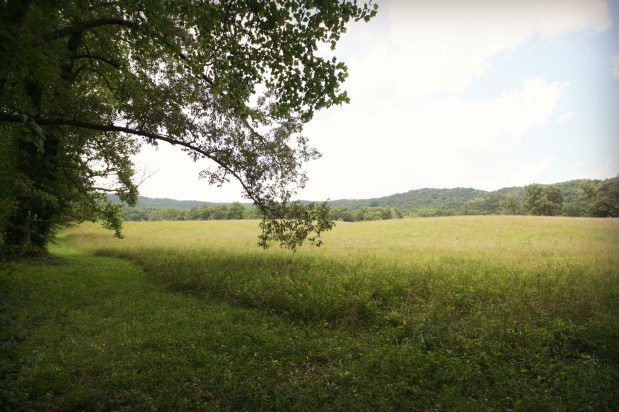 One of the perks of staying in Townsend is the close proximity to Cades Cove, so on our first full day we headed to the national park and straight to Cades Cove. We should start by defining “cove.” Where we come from a cove is part of a lake. It is a smaller section of water close to land that you ancher down in. That is the not the case here. Here a cove is a flat valley between mountains or ridges. Cades Cove is an 11 mile one-way loop through the national park. It was settled in the early 1800’s and for over a century people called the cove their home. Industry soon followed in the means of mills, blacksmiths, wood working, orchards, and even a few distilleries but farming was the main occupation in the cove. The population of Cades Cove reached 685 people with around 135 families right around 1850. Churches and school were built.
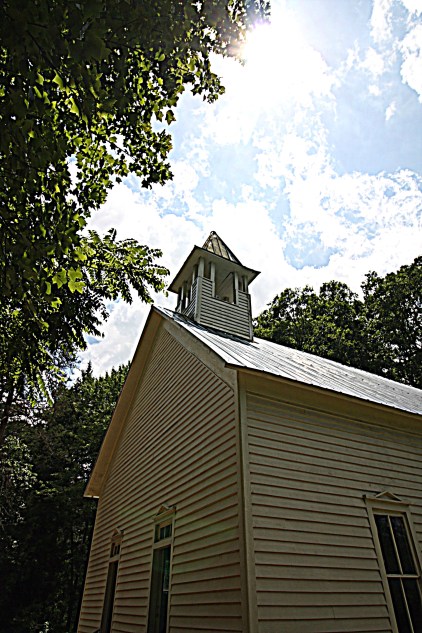 Tennessee and North Carolina began buying land that is now part of the national park and gave it to the government for park use. Cades Cove residents were given the option of selling and leaving. Some sold quickly and others resisted. Not everyone left Cades Cove. Some agreed to less money for their land if they could remain on it until they died. The last school closed in 1944 and the post office closed in 1947.
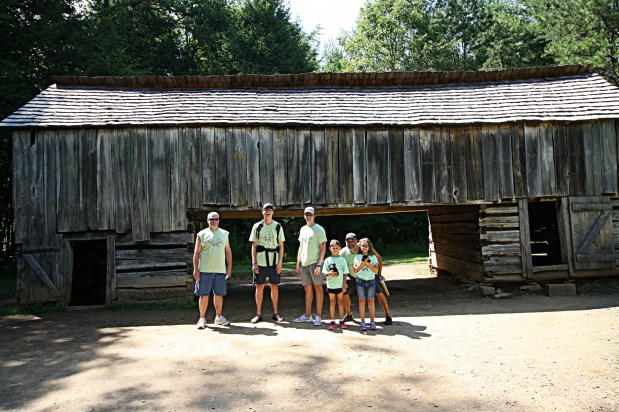 Before visiting The Smoky Mountain National Park I knew a little of the parks history. The land was all privately owned and lumber companies owned 85% of the land and were logging it. Besides depleting the trees the changing forest also impacted the deer and animal populations. Thankfully conservation efforts have been successful as we were able to see many deer and bears during our visits to the park.
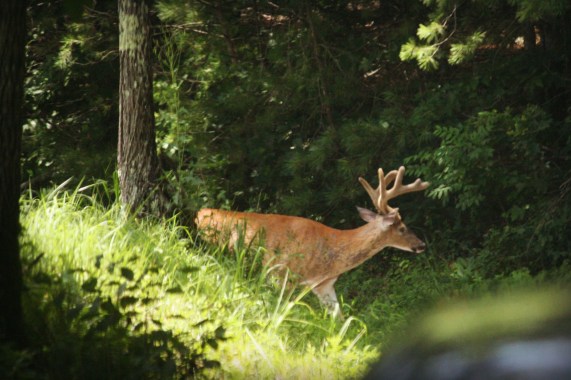
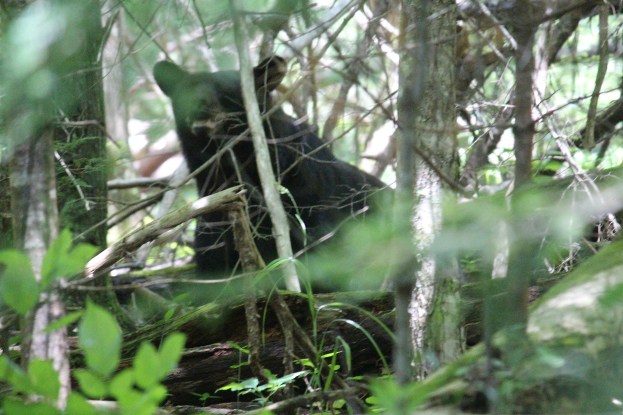 It took us a few hours to make the 11 mile loop.The view is very scenic and you never know when an animal will appear which will stop all traffic. The buildings former residents used/lived in are still available so it is worth it to stop and hike around. Every time we found a large group of cars stopped, we stopped. It served us well. We ended up seeing a total of 6 bears that first day in Cades Cove. Sometimes we found out people were stopped to see deer and to be honest that thrilled us less because we have them at home. Either way, when you see a large buck with velvet on his antlers, you still stop in awe.
 We stopped at the Visitor Center and Cable Mill area and walked around. The cable mill was still running and grinding cornmeal the day we visited. It was a pleasure talking to the mill operator as he explained how fast the mill could run and course or fine the former operates could make the cornmeal or flour.
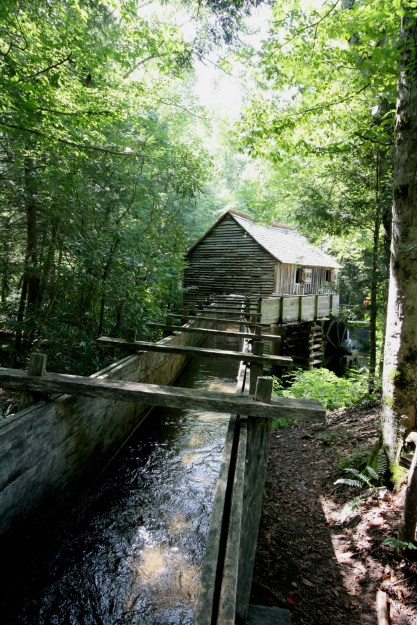 It was hot during our visit and there were warning signs everywhere cautioning us to be aware of snakes. They like to find cool places to hide during the heat of the day and that can include many of the old buildings. Thankfully we did not find any slithering creatures during our visit. We did find access to the stream that runs along the mill. The Short Chic asked permission to put her feet in it. Being accustomed to the mountain streams in the Rockies I told her yes but the water would be freezing cold. Little did I know, the Smoky Mountain streams are not ice cold but actually enjoyable to be in.
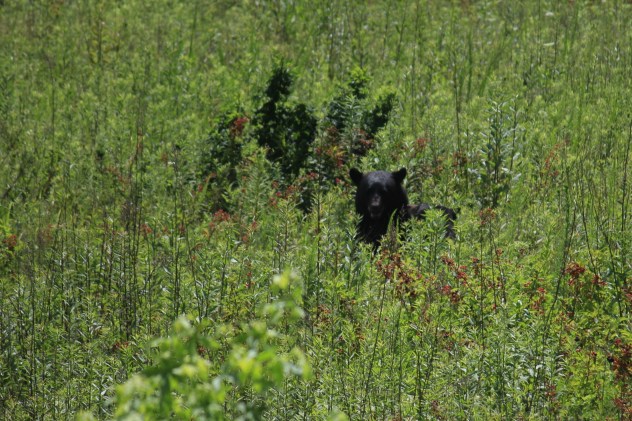 There are two gravel roads in Cades Cove that provide short cuts in the loop. Hyatt Lane and Sparks Lane are two way gravel roads that help you navigate the park if you want to repeat or skip parts. I think these roads are excellent for adding to the adventure of visiting Cades Cove. We traveled Hyatt Lane late in the afternoon and were greeted by some serious photographers looking for wild life and if I had to be specific I would guess bears. As we found out, bears like blackberries and like to come to the meadows that are full of wild berry bushes.

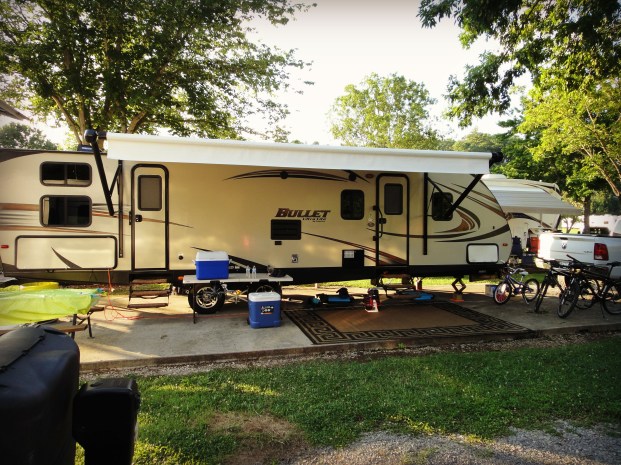 The other rule explained to us at check-in was that the gates locked at midnight and unlocked at 7:00 a.m. This rule impacted us only once. We had planned an early morning departure to drive over to Clingman’s Dome and wanted to leave by 6:30 a.m. The night before we moved our trucks to the front of the campground just outside the locked gate. The morning of our departure we walked a short walk to our trucks and went about our site seeing.
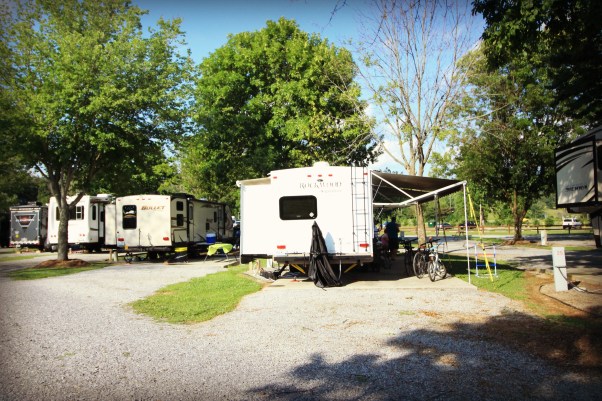 The campground has a splash park, a gazebo with a fire pit, a dog park, and a playground with a large pirate ship climbing structure. The little girls in our group loved playing in the splash park and found it a perfect place to make friends and cool off after our long days of exploring. The only negative thing that I can say about any of these amenities is that the girl’s clothing got stained after a short play on the playground area. I have no idea what they touched but it was a stain that did not come out of their clothing. But to be fair, it is a playground and they are little girls.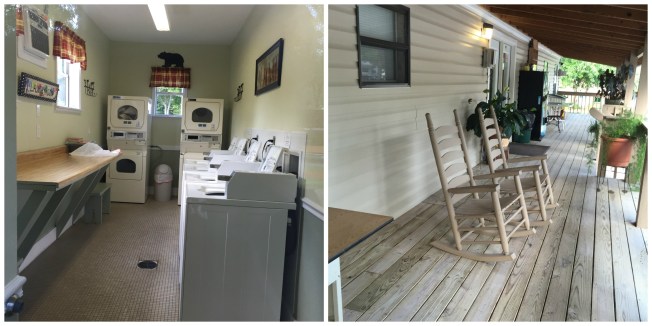
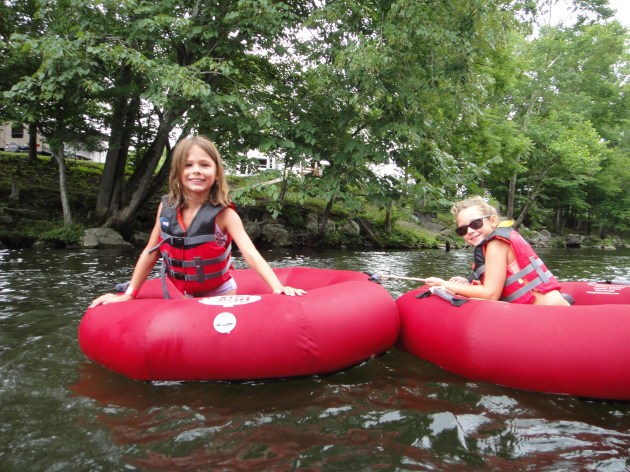
 Outside the national park, floating down the Little River is a popular pass time. There are multiple outfitters very close to Big Meadows Family Campground. Two of the outfitters are literally within walking distance to the campground and offer a mile or so float downstream. The water level of the Little River changes frequently so I think any given day the experience can be different. I promise to give you more information on floating the Little River in a later post!
 All along 321 highway is a bike path that we used to bike to
  We partook in wine tasting at Cades Cove Cellars and then stopped into
  Roam With Friends